

Essential Insights
-
Discovery of Makers’ Marks: Hallie Meredith identified previously overlooked symbols and inscriptions on ancient Roman glass cage cups, suggesting they were makers’ marks indicating the workshops and artisans behind the creations.
-
Collaborative Craftsmanship: Her research unveils the teamwork involved in producing Roman diatretum, revealing that multiple specialists worked together, emphasizing collaboration over individual artistry in ancient glass production.
-
Empathy in Craft History: Meredith advocates for a more empathetic understanding of ancient artisans, arguing that focusing on their labor and social contexts reveals a richer narrative of craft history, beyond elite perspectives.
-
Innovative Research Methods: By integrating practical experience as a glassblower and employing data science, Meredith aims to develop a database tracking linguistic nuances in ancient artifacts, challenging traditional interpretations of historical craftsmanship.
A Surprising Discovery
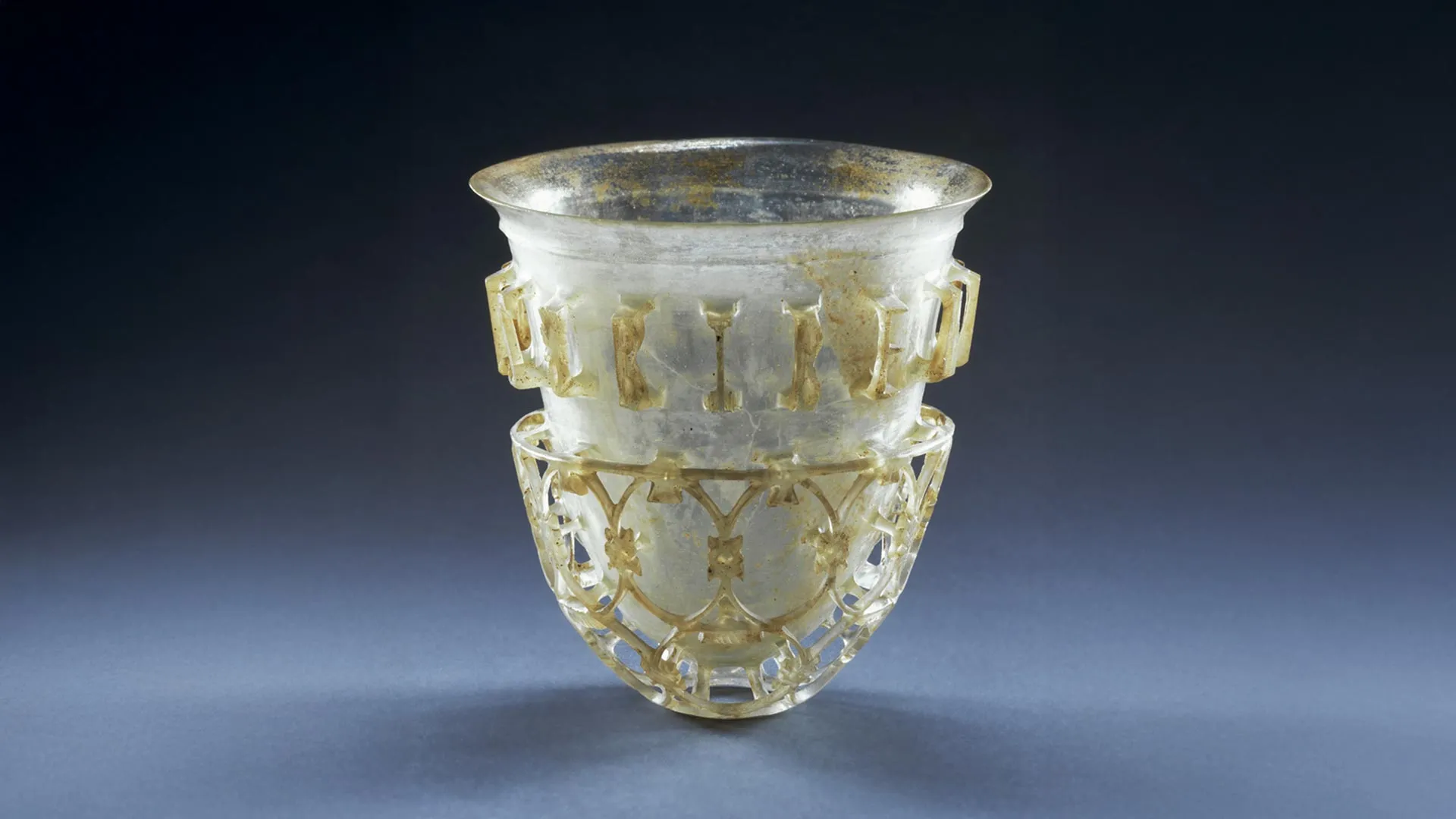
In a museum gallery, a simple turn can uncover hidden truths. Hallie Meredith, an art history professor and glassblower, made a remarkable observation while studying Roman glass cage cups. These luxury artifacts, crafted from 300 to 500 CE, were long admired for their artistry. Yet, after flipping one cup, Meredith noticed unexpected symbols and an inscription wishing the owner a long life. Scholars had treated these elements as mere decoration. However, Meredith proposes they may serve as makers’ marks, identifying the workshops behind these exquisite pieces. Her keen focus highlights the importance of curiosity over technology in revealing complex histories.
This revelation has profound implications. By analyzing the repeated symbols across various vessels, Meredith traced a network of ancient glassworkers. Her research suggests that artisans worked cooperatively in workshops, blending skills to create these intricate designs. This collaborative effort contrasts sharply with the perception that individual artisans operated in isolation. Instead, the craftsmanship of the Roman world reflects a shared identity shaped by teamwork.
Rethinking Ancient Labor
Meredith’s insights extend beyond glassmaking techniques. For centuries, scholars debated how these vessels were produced, often fixating solely on methods. Meredith argues that understanding the people behind the craft is equally essential. Each vessel, known as a diatretum, required significant time and effort from specialists who collaborated over long periods. The abstract symbols on the glass did not signify personal achievement but acted as a form of branding for the workshops.
As she prepares a book on this topic, Meredith emphasizes the need to restore visibility to ancient artisans. By focusing on laborers rather than elites, she aims to reshape perceptions of ancient craftsmanship. Furthermore, her collaboration with computer science students to create a database of unconventional writing shows a commitment to uncovering the layered narratives behind artifacts.
By viewing Roman glass through this new lens, we connect more deeply with the past. Each diatretum becomes a testament to community, creativity, and shared human experience. Engaging with these objects is not just about their beauty; it is an opportunity to recognize the lives and labor that shaped them. This evolving understanding of ancient craft can inspire a greater appreciation for the complexities of history and those who contributed to it.
Continue Your Tech Journey
Explore the future of technology with our detailed insights on Artificial Intelligence.
Stay inspired by the vast knowledge available on Wikipedia.
TechV1
