

Summary Points
-
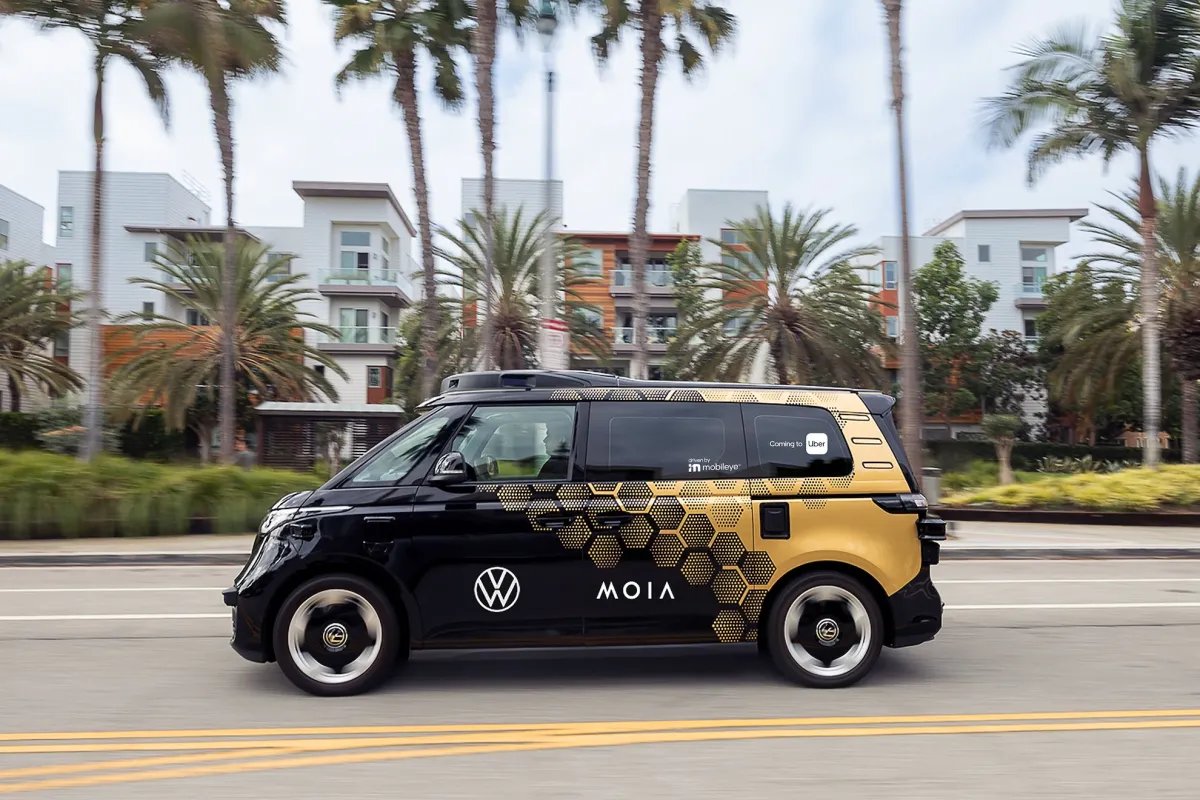
Test Launch: Volkswagen subsidiary MOIA America and Uber are beginning tests of 10 autonomous ID. Buzz microbuses in Los Angeles, aiming to launch a robotaxi service by late 2026.
-
Future Expansion: The initiative will start with a small fleet, scaling up to over 100 autonomous vehicles, which will initially include human safety operators before shifting to fully driverless operations in 2027.
-
Regulatory Hurdles: MOIA America faces a lengthy regulatory process, requiring permits from California’s DMV and Public Utilities Commission before commercial deployment of the robotaxi service.
-
Broader Autonomy Strategy: Uber is diversifying its autonomous vehicle partnerships, with plans for 10,000 fully autonomous Rivian robotaxis in the U.S. by 2028, further expanding its reach in the autonomous transport market.
Testing the Future of Transportation
Volkswagen has embarked on a bold venture by initiating tests of its self-driving microbuses in Los Angeles. This marks a pivotal moment in the development of autonomous vehicles. The company’s subsidiary, MOIA America, along with Uber, intends to launch a robotaxi service by late 2026. Initially, they will operate with a small fleet of ten autonomous ID. Buzz vehicles. Shortly, these rides will cater to four passengers each. This strategy highlights the importance of Los Angeles as a primary market. The city’s deep-rooted car culture and open-mindedness toward new technologies make it an ideal testing ground.
The testing phase represents a crucial step. It comes as MOIA America and Uber aim to expand their fleet to over 100 vehicles in the coming years. Although these vehicles will start with a human safety operator onboard, the goal is to eliminate the driver by 2027. Achieving this entails navigating regulatory hurdles. The companies must gain necessary permits from California’s Department of Motor Vehicles and the Public Utilities Commission. Such regulatory frameworks ensure safety but also slow progress.
Prospects for Widespread Adoption
The push for autonomous mobility aims to change how we perceive transportation. This endeavor serves not only to increase convenience but also to enhance urban sustainability. With fewer cars on the road, cities could experience less congestion and lower emissions. Moreover, the integration of self-driving vehicles into public transport systems could provide affordable travel options.
However, the transition to widespread adoption faces challenges. Public perception plays a significant role; people often harbor concerns about safety and reliability. Consequently, education about the technology is crucial. With firms like Uber investing in various partnerships to diversify their autonomous offerings, the industry shows promise. These collaborations, both in the U.S. and globally, reflect a collective ambition to reshape the future of transport.
The movement toward autonomous vehicles represents an exciting chapter in our ongoing human journey. It poses intriguing questions about how we will navigate our cities and interact with technology. As companies like Volkswagen and Uber make advances, society stands on the brink of a transportation revolution.
Stay Ahead with the Latest Tech Trends
Learn how the Internet of Things (IoT) is transforming everyday life.
Discover archived knowledge and digital history on the Internet Archive.
TechV1
