

Quick Takeaways
-
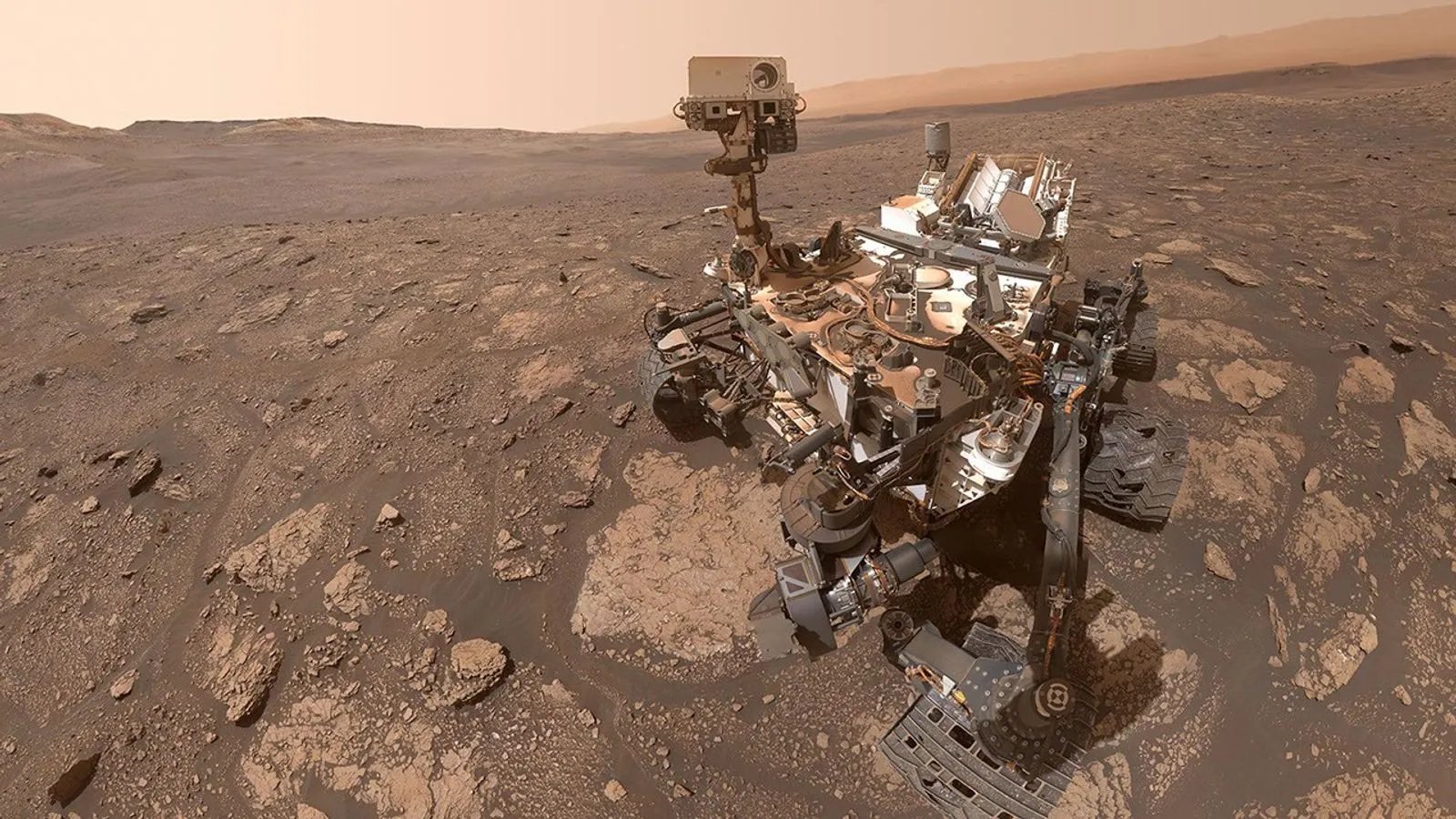
Diverse Organic Molecules: NASA’s Curiosity rover uncovered the most diverse collection of organic molecules on Mars, including seven previously unidentified compounds, reaffirming ancient Mars’ potential to support life.
-
Significant Discoveries: Among the new findings are nitrogen heterocycles, potential precursors to RNA and DNA, and benzothiophene, linking Martian organic molecules to prebiotic chemistry in the solar system.
-
Advanced Analysis Techniques: The Sample Analysis at Mars (SAM) instrument utilized innovative “wet chemistry” techniques, focusing on high-value samples, leading to groundbreaking discoveries with a powerful solvent, TMAH.
-
Future Missions Preparedness: Curiosity’s advancements set the stage for future Mars exploration, with next-generation instruments planned for ESA’s Rosalind Franklin rover and NASA’s Dragonfly mission, enhancing our ability to study extraterrestrial organic chemistry.
NASA’s Curiosity Discovers Unique Organic Molecules on Mars
NASA’s Curiosity rover has made an exciting discovery on Mars. After years of lab work, scientists reported finding a rock sample rich in organic molecules. The researchers identified a total of 21 carbon-containing molecules, with seven being firsts for Mars.
Transitioning from previous findings, these organic compounds suggest ancient Mars had conditions suitable for life. Scientists cannot yet determine if these molecules formed through biological or geological processes, but both scenarios remain plausible. Importantly, these findings reaffirm the idea that Mars once harbored environments that could support life.
The sample is named “Mary Anning 3,” after a historical English paleontologist. Curiosity collected this rock from an area once covered with lakes and streams billions of years ago. These ancient waterways allowed for the preservation of organic compounds, which are essential to life and can last for eons.
Among the newly discovered molecules is a nitrogen heterocycle. This structure has a ring of carbon atoms that includes nitrogen. It serves as a potential precursor to RNA and DNA, key components of genetic information. This discovery excites scientists because it opens new avenues for understanding life’s building blocks.
Another notable molecule found is benzothiophene, which contains both carbon and sulfur. Scientists link such molecules to the origins of prebiotic chemistry, suggesting they could have laid the groundwork for life across the solar system.
These findings build on last year’s discovery of long-chain hydrocarbons on Mars. Curiosity’s team worked diligently to gather and analyze the samples, showcasing the collaborative efforts of engineers and scientists.
The rover employs an advanced lab system, called the Sample Analysis at Mars (SAM). This system enables Curiosity to analyze samples by heating them to reveal their composition. Curiosity also recently tested a new technique using a special solvent to enhance molecule detection.
NASA plans to apply what Curiosity has learned to future missions, including a next-generation Mars rover. This next rover will utilize similar techniques to search for organic matter, broadening our understanding of Mars and life’s potential elsewhere.
These discoveries not only advance science but also inspire technological innovation. Engineers face the challenge of miniaturizing complex equipment to fit on a rover. The success of SAM illustrates how overcoming this hurdle opens doors for future explorations.
As we continue to learn more about Mars, we inch closer to answering fundamental questions about life’s origins in our universe. Finding such diverse organic molecules offers hope and excitement for what future discoveries may reveal.
Discover More Technology Insights
Stay informed on the revolutionary breakthroughs in Quantum Computing research.
Stay inspired by the vast knowledge available on Wikipedia.
SciV1
