

Fast Facts
- The Moon’s shadow caused a total solar eclipse across several Northern regions.
- It traveled from the Arctic through Greenland, Iceland, Portugal, and Spain.
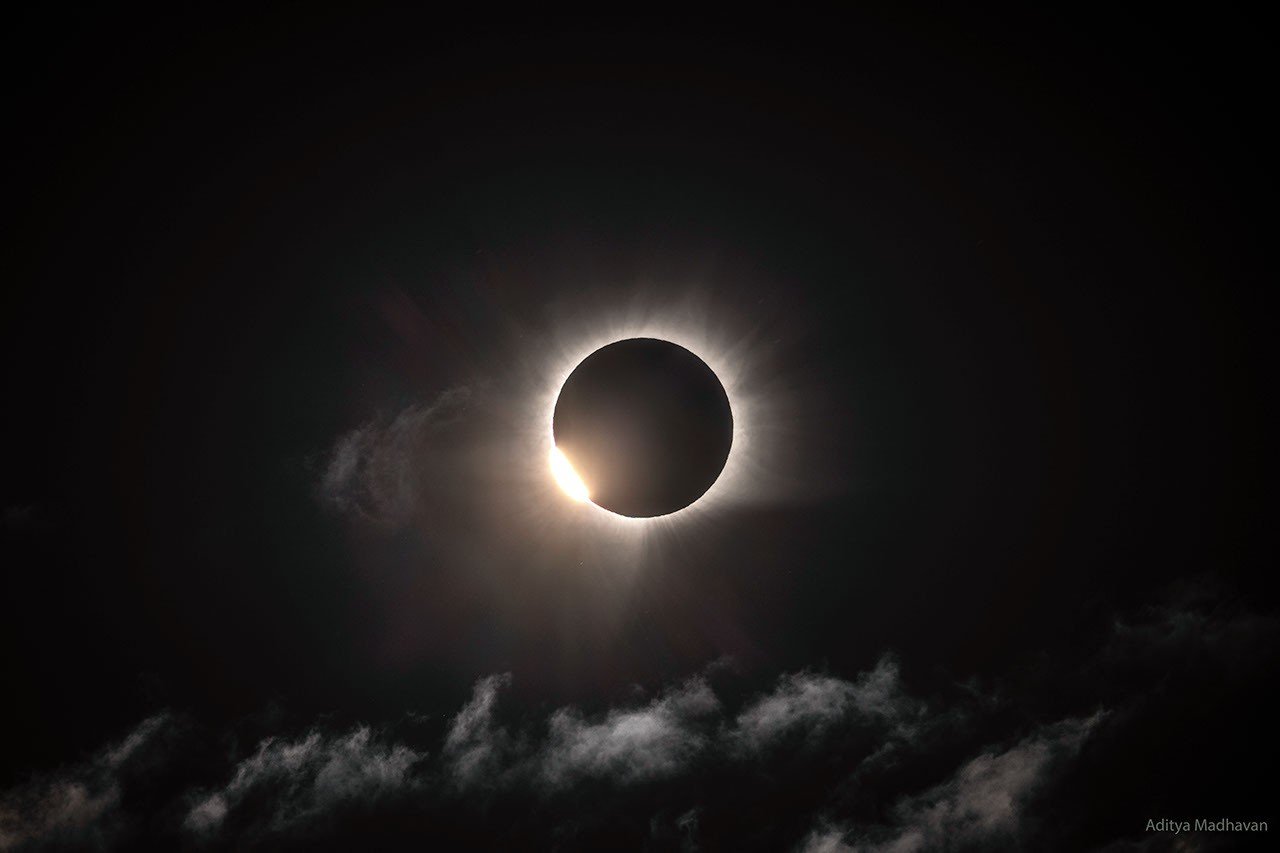
- A clear sky allowed a rare photograph of the total eclipse at Greenland’s coast.
- The image captured the Sun’s corona, diamond ring, and first moments of totality.
Capturing a Rare Moment: The Total Solar Eclipse from Greenland
On August 12, 2026, a spectacular celestial event took place that excited skywatchers around the world—a total solar eclipse. This event occurs when the Moon passes directly in front of the Sun, blocking its light and turning day into night temporarily. The shadow of the Moon traveled across Earth’s surface, beginning in the Arctic Ocean. It moved along a narrow path that included parts of Greenland, Iceland, the Atlantic Ocean, Portugal, and northern Spain. Only viewers within this path experienced the full, awe-inspiring darkness of totality.
A key highlight of this eclipse was a successful observation from Greenland. A team managed to reach the shoreline at Rype Fjord on the east coast, located at 71.07055°N, 27.71252°W. After navigating weather challenges, they captured a remarkable photo at 17:33:26 UTC, just as the sky was clearing in the area. This image is among the first clear views of the fully eclipsed Sun, offering a rare glimpse of this fleeting moment.
The photograph reveals several stunning features. Through a break in the clouds, viewers can see the tiny, bright diamond ring that appears as the Sun’s light peaks through a gap in the Moon’s edge. This is a brief but beautiful phenomenon that signals the moment just before and after totality. The image also captures the solar corona—the Sun’s outer atmosphere—which shines brightly around the dark silhouette of the Moon during totality. This glowing halo creates a captivating display of light and shadow, often described as one of nature’s most beautiful sights.
Why This Eclipse Matters
Eclipses are rare events that give us a closer look at our universe. Since total solar eclipses only happen about once every 18 months somewhere on Earth, each one offers a unique opportunity for scientific study and personal wonder. Advancements in technology, such as high-resolution photography and precise timing, allow scientists to gather valuable data during these events.
For sky enthusiasts, witnessing a total eclipse remains an extraordinary experience. It challenges us to appreciate the dynamic nature of our planet and the celestial mechanics that govern it. The 2026 eclipse from Greenland not only provided a breathtaking visual but also reinforced humanity’s deep connection to the cosmos. Future eclipses, like the upcoming Perseid meteor shower forecast, continue to inspire curiosity, exploration, and a sense of unity across cultures and borders.
Discover More Technology Insights
Stay informed on the revolutionary breakthroughs in Quantum Computing research.
Access comprehensive resources on technology by visiting Wikipedia.
Space
