

Summary Points
- Researchers propose using spacecraft to proactively strengthen Earth’s magnetosphere against solar storms.
- The StormWall system could reduce geomagnetic storm intensity by over 50%.
- Six satellites would release materials to create an artificial plasma shield.
- The approach offers global protection but raises cost and deployment considerations.
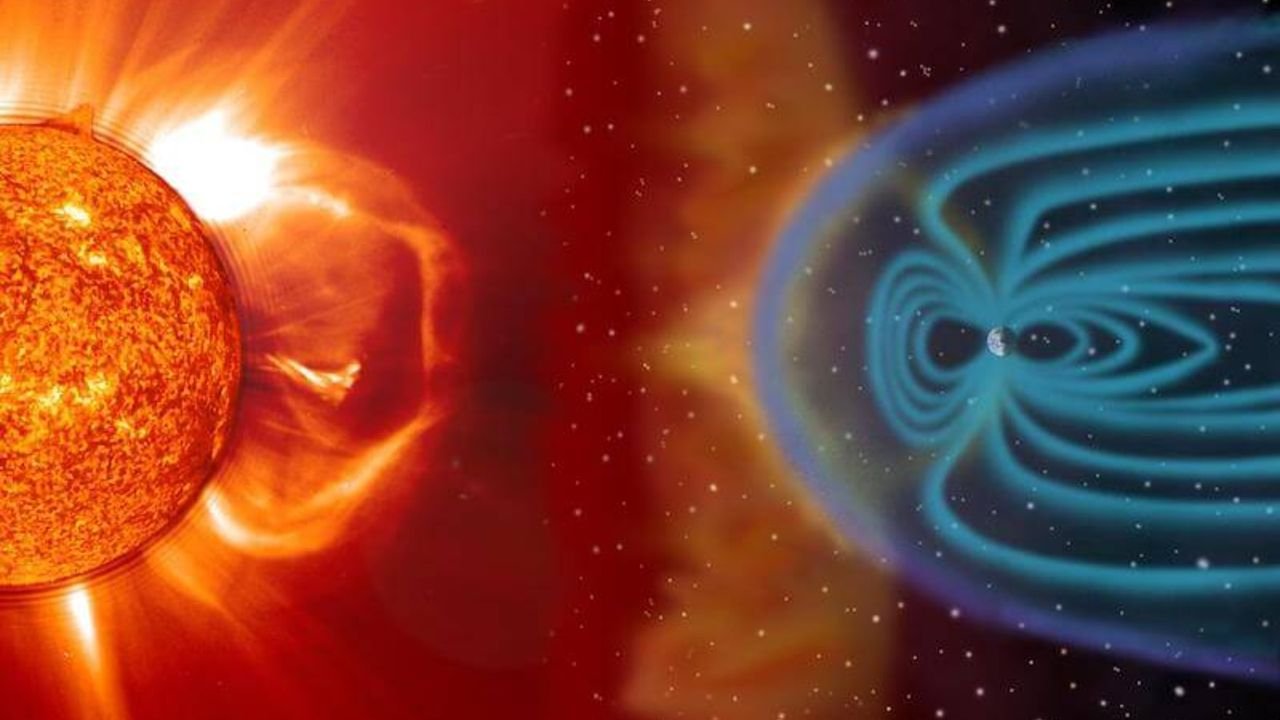
Scientists propose spraying chemicals into Earth’s magnetic field to protect us from powerful solar storms. When severe solar storms approach, Earth’s magnetosphere acts as a shield. This magnetic bubble deflects harmful charged particles from the sun. Traditionally, humans have relied on forecasting these storms. However, a new approach aims to enhance this natural defense.
### The StormWall Concept
A team of researchers from Boston University has proposed a system called StormWall. This ambitious project could curb the impact of solar storms on Earth. The researchers used computer models to show that reinforcing the magnetosphere could reduce the severity of a geomagnetic storm by more than half. If implemented, StormWall could protect vital infrastructure such as satellites, GPS systems, and electrical grids.
During a powerful solar eruption, Earth’s magnetic field can be disrupted through a phenomenon known as magnetic reconnection. This occurs when the solar wind aligns with Earth’s magnetic field, allowing solar energy to flood into near-Earth space. The StormWall system aims to prevent this by deploying six spacecraft into geosynchronous orbit. Each spacecraft would carry a “mass-loading material,” which may include substances like barium or lithium.
At the first sign of a solar storm, mission controllers would command the satellites to release this material. Sunlight would ionize the particles, creating a cloud of electrically charged plasma. This artificial plasma would then enhance the boundary of the magnetosphere, making it more robust against incoming solar winds. Essentially, this process would stall magnetic reconnection, causing space weather to deflect and navigate around our planet.
### Feasibility and Implications
The researchers simulated the historical Mother’s Day storm of 2024 to test StormWall’s effectiveness. Their results confirmed that while StormWall wouldn’t completely eliminate geomagnetic storms, it could significantly lessen their intensity. By disrupting the energy flow where it meets the magnetosphere, the artificial plasma could redirect harmful space weather away from Earth.
Yet, the challenges of implementing StormWall are not insignificant. The system would require a payload equivalent to about a dozen oil trucks’ worth of material, presenting a considerable expense. Additionally, once deployed, the mass-loading materials would be consumed, offering a one-time-use solution. As private companies invest heavily in space infrastructure, this cost might become more manageable.
Despite the potential benefits, scientists must carefully weigh the unintended consequences of altering such intricate systems. However, the risk of long-term contamination appears low, as the plasma would dissipate into space relatively quickly, carried away by the solar wind.
The advantages of a global defense system are clear. If deployed, StormWall would provide collective protection for everyone on Earth. This innovative approach could mark a shift towards proactive measures against the unpredictable threats posed by our sun. Further details about the StormWall concept were published in the journal Space Weather on June 2.
Discover More Technology Insights
Stay informed on the revolutionary breakthroughs in Quantum Computing research.
Access comprehensive resources on technology by visiting Wikipedia.
Space
