

Fast Facts
- Total solar eclipses create brief, awe-inspiring celestial phenomena worldwide.
- The 2026 eclipse path crossed Siberia, Greenland, Iceland, and Spain.
- Witnessing the corona and planetary alignments made it an unforgettable experience.
- Next eclipses: 2027 in Africa and 2033 in Alaska, US.
Awe-Inspiring Views and Cosmic Encounters
On Aug. 12, 2026, millions of skywatchers across Greenland, Iceland, and Spain experienced a rare and breathtaking event— a total solar eclipse. This spectacular cosmic show lasted only a few minutes but left a lasting impression on everyone present. The shadow of the moon swept across Earth in a 182-mile-wide corridor, known as the path of totality, creating a brief but unforgettable moment when the sun disappeared behind the moon.
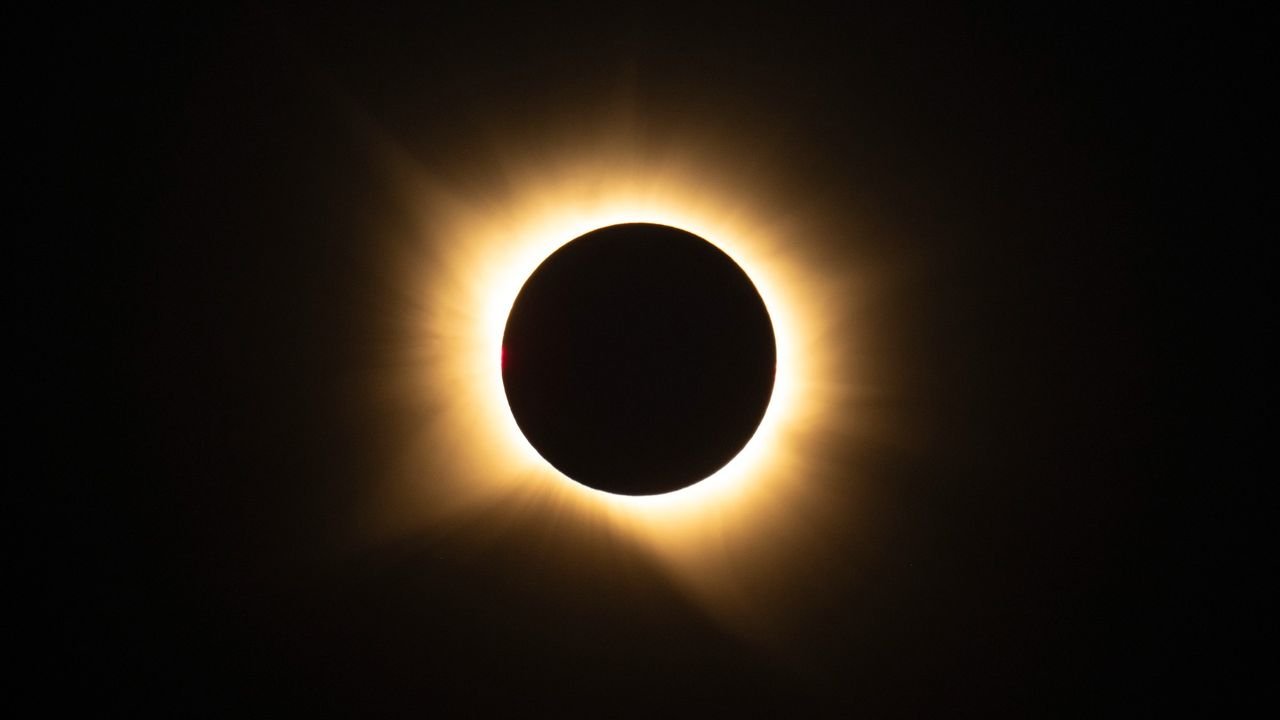
Many gathered in prime viewing spots, such as Scoresby Sund in Greenland, to witness the sun’s outer atmosphere, the corona, glowing around the dark silhouette of the moon. Space.com’s Daisy Dobrijevic, aboard the HX Expeditions’ MS Spitsbergen, described her experience as “something I will never forget.” She noted how the delicate corona streaming out into the night sky created a spellbinding sight, with planets like Jupiter, Mercury, and Venus adding to the celestial display.
In Spain, viewers like Anthony Wood of Space.com called the event “the most incredible thing I’ve seen in my entire life.” From Valoria la Buena to the Mediterranean coast, observers watched as the moon aligned perfectly, revealing the sun’s fiery crown for a fleeting moment. The eclipse was so luminous and powerful that it seemed almost surreal—an ephemeral yet profound glimpse into the mechanics of our solar system.
This event also included observations of the moon’s prominence, a large, fiery projection that added to the spectacle’s grandeur. Photographers captured images of the corona and the eclipse’s shadow moving across mountain ranges and coastal landscapes. The brief glimpse of the sun’s corona is a reminder that, despite being hidden during totality, the sun’s outer atmosphere is a crucial part of its personality, rich with magnetic activity and fiery plasma.
And just like that, it’s over. Total solar eclipses are incredible moments in time, but they are fleeting. As the moon passes directly in front of the sun and its shadow sweeps across Earth’s surface, the temperature drops, and the light takes on an eerie twilight quality. Birds and other animals go quiet. It’s a spectacle unlike any other. And for millions who were lucky enough to be in the path of totality today, it was a moment of awe and wonder that will stay with them for a lifetime.
The 2026 eclipse provided viewers with a rare chance to witness not only the moon and sun but also the universe’s grand choreography. It was a reminder of how celestial phenomena can inspire awe, curiosity, and a deeper understanding of the cosmos. As we look forward to future eclipses, the wonder of these events continues to captivate humanity and push the boundaries of our knowledge.
Future Eclipses and How to Watch
The next total solar eclipse will occur on Aug. 2, 2027. Its path will cross parts of southern Spain, North Africa, and the Middle East, offering another chance to see the moon completely block the sun. For North Americans, the subsequent total eclipse is set for March 30, 2033, visible from Alaska, with more opportunities following in 2044 across parts of the United States and Canada.
Partial solar eclipses, like those seen during the 2026 event outside the path of totality, are accessible to many more people. Observers in Europe, Scandinavia, and even parts of northeastern United States and Canada witnessed the moon taking a “bite” out of the sun. This partial eclipse still offers a striking view, especially with the help of specialized telescopes and solar filters.
Technology plays a crucial role in safely viewing these phenomena. Cameras, telescopes, and solar filters allow skywatchers to capture images and enjoy the eclipse without risking damage to their eyes. Sharing these moments helps spread awareness and appreciation of our universe’s beauty. For those interested in future eclipses, planning ahead and understanding the path of totality will make the experience even more meaningful.
If you captured photos or videos of the 2026 eclipse, space agencies and science outlets encourage sharing those memories. These stories and images not only document the event but also inspire others to look up and appreciate the universe’s grand design. As celestial events become more accessible thanks to advancing technology, humanity’s connection to the cosmos continues to grow stronger, fueling curiosity and discovery for generations to come.
Discover More Technology Insights
Explore the future of technology with our detailed insights on Artificial Intelligence.
Access comprehensive resources on technology by visiting Wikipedia.
Space
