

Quick Takeaways
- The new research challenges the Nice model’s explanation of early Solar System instability.
- Simulations show Uranus’s moons likely experienced collisions and chaotic orbital shifts.
- Findings imply the Solar System’s current order may be a rare or collision-heavy outcome.
- Future studies needed to explore the impact of early planetary encounters on system evolution.
The Hidden Past of Our Solar System
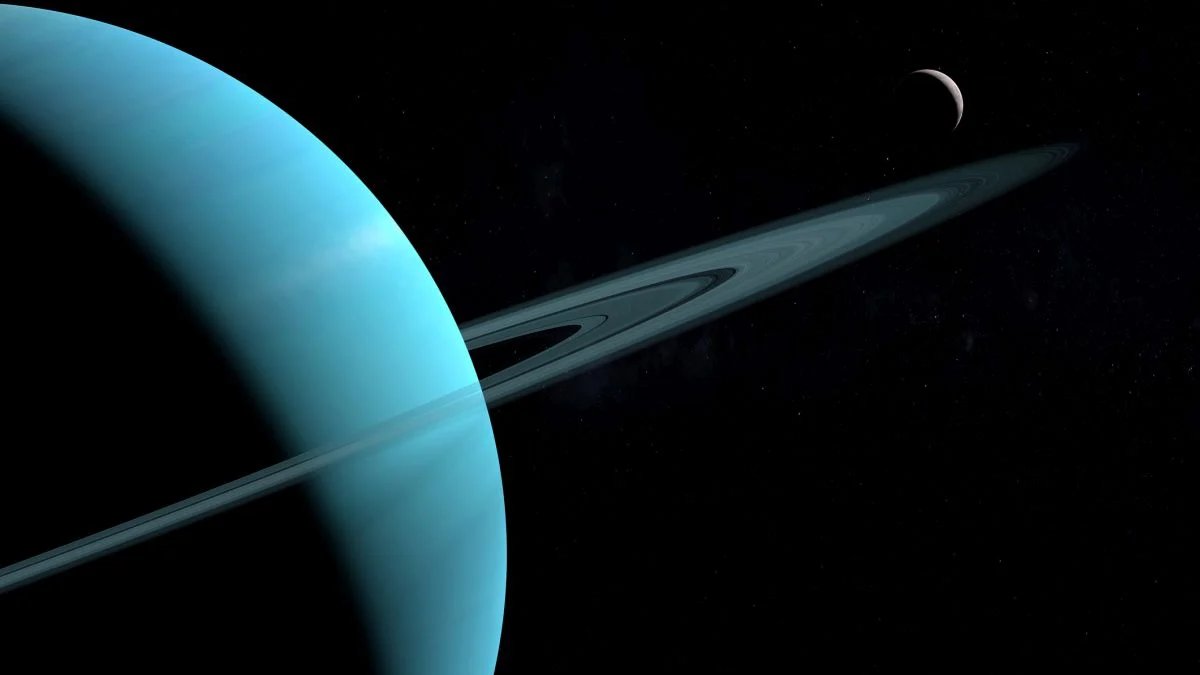
The Solar System is often seen as a stable, predictable place. The planets orbit the Sun in neat rows, making patterns we observe every night. But recent studies suggest it might have had a chaotic beginning. According to the popular Nice model, our Solar System may have started with four ice giants instead of just two, Uranus and Neptune. These extra planets could have been ejected billions of years ago. Now, new simulations cast doubt on this idea. They show that if these extra planets existed, they would have caused intense disturbances. Uranus’s moons, in particular, would likely have experienced collisions or ejections. Yet, today, Uranus’s moons appear relatively stable and undisturbed. This mismatch hints that our current understanding of how the Solar System evolved may be incomplete. It raises possibilities that either the history was more violent than we thought or that the models need adjusting.
Implications for Our Understanding of Solar History
The research suggests three main ideas. First, Uranus’s moons could have been heavily disrupted during early chaos, with collisions or orbital shifts. Second, the Nice model might need revision, as the simulations show it doesn’t fit well with moon stability. Third, the Solar System’s evolution could have been more unlikely and complicated than previously believed, with minimal deep encounters affecting Uranus’s moons. The findings imply our early Solar System was messier and more violent than the peaceful view we often have today. This new perspective encourages scientists to explore other scenarios and refine existing models. It shows how ongoing research constantly updates our understanding of the universe’s history.
Continue Your Tech Journey
Stay informed on the revolutionary breakthroughs in Quantum Computing research.
Access comprehensive resources on technology by visiting Wikipedia.
QuantumV1
