

Essential Insights
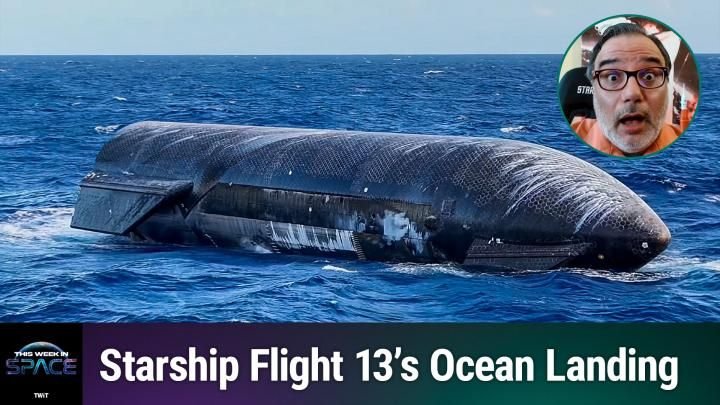
- SpaceX’s Starship survived reentry and floated in ocean for days.
- NASA’s Roman Space Telescope is set to launch in one month.
- Swift Space Observatory’s rescue mission faces technical issues.
- India’s Vikram-1 achieved its first successful private orbital launch.
Spacecraft and Satellite Highlights from Episode 221
This week’s episode of This Week In Space discusses remarkable recent advancements in space exploration. A key focus is SpaceX’s Starship Flight 13, which made headlines for a surprising reason. The spacecraft deployed new Starlink V3 satellites successfully, but what drew extra attention was its reentry. Instead of breaking apart, the Starship survived descent and floated for days in the ocean. This feat raises questions about the ship’s durability and potential future uses as a space vehicle that can withstand reentry and possibly recoverability. The discussion considers the risks and benefits of technologies that might allow reusable, floating spacecraft for exploration and supply missions.
The episode also covers NASA’s upcoming Roman Space Telescope, which is just about a month away from launch. This telescope is designed to explore dark energy, map the universe’s structure, and hunt for exoplanets. Its successful launch could open new windows into understanding the cosmos. Meanwhile, efforts are underway to rescue the Swift Space Observatory, which is experiencing issues. A servicing spacecraft is being prepared to repair Swift, but this service craft faces its own technical difficulties, complicating the mission. Additionally, the podcast touches on Boeing’s ongoing delays with its Starliner crewed capsule and the recent success of India’s first private orbital launch. Skyroot Aerospace’s Vikram-1 rocket launched successfully, marking a milestone in private spaceflight.
A notable highlight includes a model Falcon 9 rocket produced by Estes. Priced at $149.99, this detailed, launchable scale model allows enthusiasts to mimic real rocket launches at home. It adds a practical element to space interest and educational activities, especially for those wanting a hands-on experience with rocket technology.
Technological Progress and Industry Movements
The episode presents a balanced view of current industry trends. The surviving reentry of Starship suggests advancements in spacecraft resilience. Its ability to float after reentry shows potential for recovery and reuse strategies in future missions. This capability could reduce costs and increase mission flexibility, though questions about safety and reliability remain. The Roman Space Telescope represents the next step in space-based observational science, promising breakthroughs in understanding cosmic phenomena. Its upcoming launch is seen as a positive sign of continued investment in scientific exploration.
Meanwhile, the rescue efforts for Swift reflect the challenges of complex space hardware. Servicing missions are critical to extend the life of space telescopes, but technical issues highlight the ongoing difficulties in maintaining such systems. The success of India’s Vikram-1 rocket underscores the influence of private companies in spaceflight. It signals a new era where commercial players can achieve milestones once dominated by government agencies. The availability of a detailed Falcon 9 model offers a way for enthusiasts to learn more about rocket design and launch technology, fostering education and curiosity about space.
Overall, the episode underscores how technological innovation, industry collaboration, and persistent problem-solving shape the modern space age. As missions grow more ambitious and diverse, the focus remains on practical application, innovation, and expanding our understanding of the universe.
Stay Ahead with the Latest Tech Trends
Dive deeper into the world of Cryptocurrency and its impact on global finance.
Stay inspired by the vast knowledge available on Wikipedia.
Space
