

Summary Points
- A laser accident in 1993 led to groundbreaking LASIK eye surgery development.
- The femtosecond laser improved vision correction with reduced recovery times.
- NSF funding supported crucial research, leading to widespread ophthalmic advancements.
- Ongoing research explores new applications of femtosecond laser technology in medicine.
The Unlikely Spark of Innovation
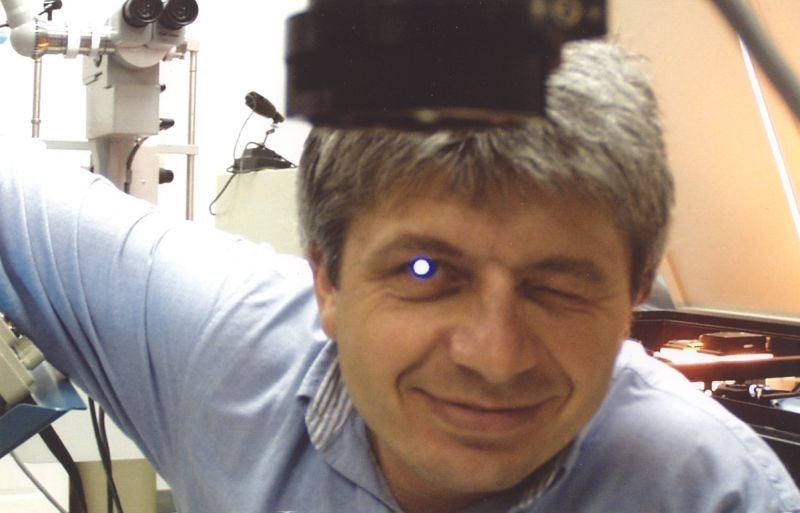
A laboratory accident involving a femtosecond laser changed the course of eye surgery. Over 30 years ago, a University of Michigan graduate student accidentally injured his eye during research. This incident led to groundbreaking advancements in LASIK eye surgery, which has since improved vision for over 30 million people. The femtosecond laser, capable of emitting incredibly short light pulses, allowed scientists to develop precise surgical techniques without traditional blades.
This work began at the Center for Ultrafast Optical Science (CUOS), funded by the National Science Foundation (NSF). Researchers like Tibor Juhasz and Gerard Mourou explored how this technology could improve medical procedures. In 1997, they established IntraLase Corp. They aimed to commercialize bladeless LASIK surgery using femtosecond lasers. Support from NSF’s Small Business Innovation Research program proved crucial. It transformed an innovative concept into a viable product.
Despite initial skepticism and slow adoption, the procedure gained traction. A pivotal study by the U.S. Navy in 2006 showed that LASIK improved recovery times and visual acuity for military pilots. The medical community and the public soon recognized the benefits of this new approach. In 2007, IntraLase was acquired for $808 million, reflecting its profound impact on ophthalmology.
The Role of Federal Support
The journey from discovery to innovation underscores the importance of federal support for scientific research. Funding from NSF played a key role in facilitating collaboration among scientists, engineers, and clinicians. The organization encouraged researchers to pursue high-risk, high-reward projects. This collaborative spirit fostered groundbreaking ideas that reshaped the eye care landscape.
Today, femtosecond lasers have applications beyond LASIK. They continue to revolutionize cataract surgery and glaucoma treatments. Companies like ViaLase and Clerio Vision explore these advancements, driven by NSF-funded research. Innovators aim to make procedures safer and more effective for patients.
This story highlights the essential link between research and application. Federal funding not only aids scientific discovery but accelerates its transition to practical use. As we look to the future, continued investment in research holds the promise of even more medical breakthroughs. The LASIK journey provides a powerful reminder of how a single accident can lead to a transformative industry, benefiting millions worldwide.
Expand Your Tech Knowledge
Explore the future of technology with our detailed insights on Artificial Intelligence.
Explore past and present digital transformations on the Internet Archive.
TechV1
