

Summary Points
- Waymo launches sixth-generation Ojai robotaxi in select US cities for riders.
- Ojai costs $75,000 less and uses 42% fewer sensors than I-PACE.
- Concerns rise over Ojai’s reliance on Chinese manufacturing amid political scrutiny.
- Waymo aims for one million rides weekly by 2026, expanding globally.
### The Economic Shift in Autonomous Vehicles
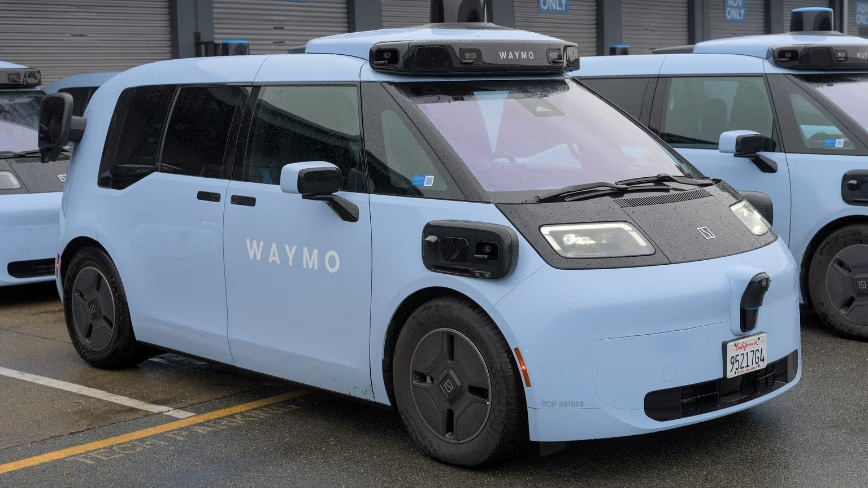
Waymo has transformed its approach to robotaxis with the introduction of the Ojai. This vehicle, built by Geely’s Zeekr in China, marks a fundamental change in design and cost. The Ojai costs about $125,000, a significant drop from $200,000 for the Jaguar I-PACE it replaces. Lower costs arise from a 42% reduction in sensor count. Fewer cameras and lidar units do not come at the expense of technology. The new sensors offer improved quality and range, making the vehicle capable of navigating diverse weather conditions.
Waymo aims for efficiency and scale. The company envisions thousands of Ojai vehicles operating by the end of the year. It targets one million weekly rides by 2026, expanding its service to more cities, including potential international markets. The robotaxi industry has many players, yet Waymo holds a notable lead in commercial operations. Still, questions about manufacturing practices and regulatory scrutiny loom large, particularly concerning reliance on Chinese production.
### Navigating the Political Landscape
The political implications of the Ojai’s supply chain cannot be overlooked. Lawmakers have expressed concerns about manufacturing in China, especially amid rising geopolitical tensions. A U.S. senator has already questioned Waymo’s partnership with Geely. The company imports stripped-down vehicle bodies from China, which offers a workaround to heavy tariffs on fully finished electric cars. However, as discussions regarding data security and software regulations heat up, Waymo may face challenges in maintaining its current setup.
Despite these concerns, Waymo’s innovative approach offers a viable path forward. The Ojai caters specifically to the ride-hailing market, which has struggled with high vehicle costs. The shift to a purpose-built robotaxi could set a new standard for the industry, addressing the economic strains that have long plagued autonomous vehicle operations. Overall, Waymo’s strategy to leverage technology and scale may drive the future of urban mobility, but the journey will not lack obstacles.
Continue Your Tech Journey
Explore the future of technology with our detailed insights on Artificial Intelligence.
Discover archived knowledge and digital history on the Internet Archive.
TechV1
