

Essential Insights
-
Origin of Silane: The presence of silane in the ancient brown dwarf is attributed to a lower oxygen environment in the early universe, leading silicon to bond with hydrogen instead.
-
Study Objectives: Researchers aimed to understand the unusual characteristics of this brown dwarf, discovering unexpected components like silane in the process.
-
Implications for Exoplanet Research: Studying brown dwarfs provides valuable insights into planetary atmospheres, which could assist future analyses of potentially habitable Earth-like exoplanets.
-
Complexity in Planetary Analysis: The findings highlight the need for scientists to navigate complicated atmospheric data, preparing them for the challenges of studying rocky planets beyond our solar system.
NASA Study: Celestial ‘Accident’ Sheds Light on Jupiter, Saturn Riddle
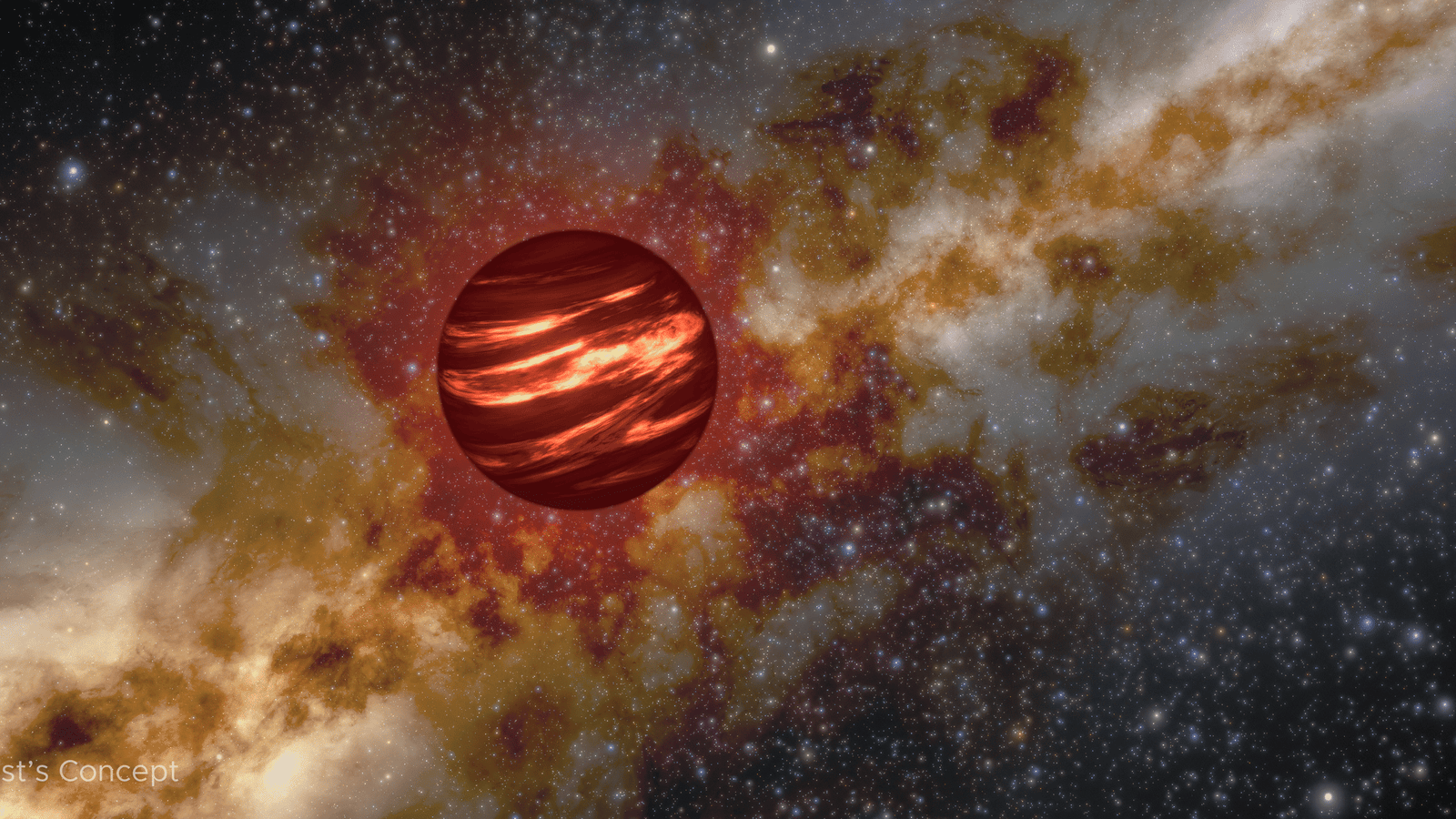
NASA scientists recently made an exciting discovery while studying an unusual brown dwarf. This brown dwarf, unlike typical stars, lacks a fusion reactor. As a result, it cools over time, developing an atmosphere similar to gas giants like Jupiter and Saturn.
Initially, researchers aimed to understand the brown dwarf’s unique characteristics. However, they stumbled upon silane, a silicon-hydrogen compound that caught their attention. This surprises researchers because they expect to find less silicon in such environments. The findings suggest that when the brown dwarf formed, the universe had much less oxygen available. Consequently, the silicon bonded with hydrogen instead of oxygen, leading to the creation of silane.
Moreover, studying brown dwarfs offers scientists a clearer view of planetary atmospheres. Unlike distant exoplanets, whose light often gets overwhelmed by their stars, brown dwarfs shine on their own. Thus, analyzing their atmospheres can help scientists infer the composition of other celestial bodies, including those outside our solar system.
However, this research doesn’t promise discoveries of life on brown dwarfs. Instead, it prepares scientists for future studies of rocky, potentially habitable planets. As researchers delve into the complexities of chemical compositions, they face challenges similar to those they might encounter when examining Earth-like planets.
This study enhances our understanding of the universe and fuels technological advancements. Tools developed for missions like NEOWISE and the James Webb Space Telescope allow for deeper exploration of planetary atmospheres. They pave the way for groundbreaking discoveries about our solar system and beyond.
For more information about the WISE mission and its findings, visit NASA’s website. This ongoing research not only enriches our cosmic knowledge but also holds promise for future technological innovations in space exploration.
Discover More Technology Insights
Explore the future of technology with our detailed insights on Artificial Intelligence.
Discover archived knowledge and digital history on the Internet Archive.
SciV1
