

Summary Points
- Infrared (IR) remote controls, introduced in the 1950s, became the industry standard due to their low cost, compatibility, and proven reliability, and remain prevalent even as Bluetooth options emerge.
- Modern TV remotes typically use IR for basic functions like turning the TV on and off, while most other commands are handled via Bluetooth, which offers more features and easier device pairing.
- Bluetooth remotes have the advantage of not requiring a clear line of sight, making them more convenient, but IR remains useful as a reliable fallback and for initial device pairing.
- The coexistence of IR and Bluetooth in remote controls is due to IR’s cost-effectiveness and compatibility, while Bluetooth enhances functionality such as voice control and using smartphones as remotes.
Infrared Tech: A Decades-Old Standard Still Going Strong
Infrared technology might seem old-fashioned, but it remains a key feature in most TV remotes. The reason is simple: it works well and costs very little. The first TV remote, created in 1950, used a cable to control the TV. Then, in 1955, the first wireless remote used visible light beams. But it was infrared remotes that became the industry standard by the 1980s. These remotes send tiny pulses of invisible light from an LED. When you press a button, the TV’s infrared sensor decodes the signals and responds accordingly. Despite the rise of Bluetooth and voice control, infrared has proved to be reliable and efficient. Its durability has helped it stay in use for over four decades. Given the thousands of TVs, soundbars, and electronics built around IR, switching entirely to other technologies would be challenging and costly. Compatibility remains a major advantage of infrared. It’s a flexible, proven standard that works with almost any TV or device. Even as new features emerge, many manufacturers include IR alongside Bluetooth, allowing the best of both worlds.
Infrared Still Has Practical Uses in Modern TVs
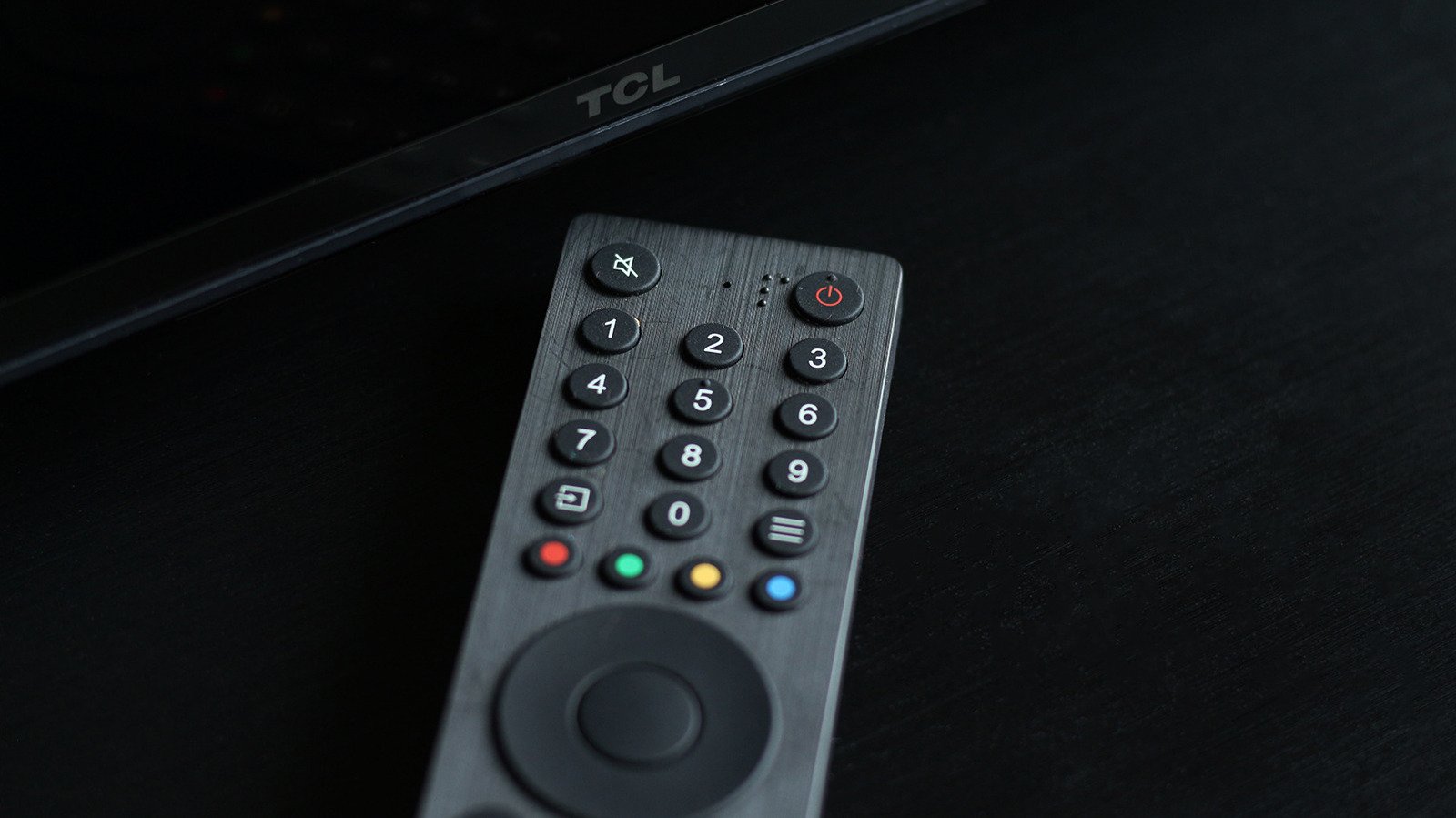
Though Bluetooth remotes offer modern perks like voice commands and air gestures, infrared still plays a crucial role. For example, when you first set up your smart TV, you need to turn it on using infrared. Many Bluetooth remotes only connect once the pairing process is complete, but the IR sensor often kicks in automatically to turn the TV on or off. I tested this with my TCL smart TV. Even though the remote is Bluetooth-enabled, it still uses infrared to power on the device. When I unpaired the remote, it switched back to infrared for basic functions. This shows IR remains essential as a dependable fallback. Bluetooth has its perks, too. It doesn’t need a direct line of sight, so you can change the volume or switch channels without sticking your arm out from underneath a blanket. Meanwhile, infrared is more battery-efficient, helping conserve power when used for simple commands. Although Bluetooth dominates many remote features, IR remains an important fallback—especially for powering devices on and off. Plus, many phones can now serve as universal remotes, controlled via Bluetooth, adding convenience without replacing IR entirely.
Balancing Classic and Modern Technologies in TV Controls
As technology evolves, many wonder whether infrared will disappear. The answer lies in balance. Infrared offers universal compatibility and reliable basic control. It keeps costs low and works with almost all TVs and accessories. Meanwhile, Bluetooth adds advanced features like voice control and multiple device management. These enhancements make remotes more versatile and user-friendly. Together, IR and Bluetooth form a flexible system, where IR handles simple, essential tasks, and Bluetooth manages complex operations. This coexistence benefits users and manufacturers alike. For example, you can turn your TV on using infrared, then control the interface via Bluetooth. This dual approach also helps in situations where Bluetooth may not be available or active. Looking ahead, expect remotes to continue combining these technologies. They will preserve the affordability and compatibility of IR, while adding new features through Bluetooth. As a result, TV controls will keep improving, offering both simplicity and sophistication. This blend reflects an understanding that old and new can work together—delivering the best experience for viewers in any situation.
Discover More Technology Insights
Explore the future of technology with our detailed insights on Artificial Intelligence.
Stay inspired by the vast knowledge available on Wikipedia.
CellphonesV1
