

Fast Facts
- NASA’s SR-1 Freedom will be the first fission-powered spacecraft beyond Earth orbit.
- It will demonstrate nuclear-electric propulsion using a developing nuclear power module.
- Sierra Lobo and Idaho develop power systems; the reactor activates beyond Earth orbit.
- Launching in 2028, it will deploy three helicopters to investigate Martian water sources.
NASA’s SR-1 Freedom Advances With Progress on Nuclear Power Module
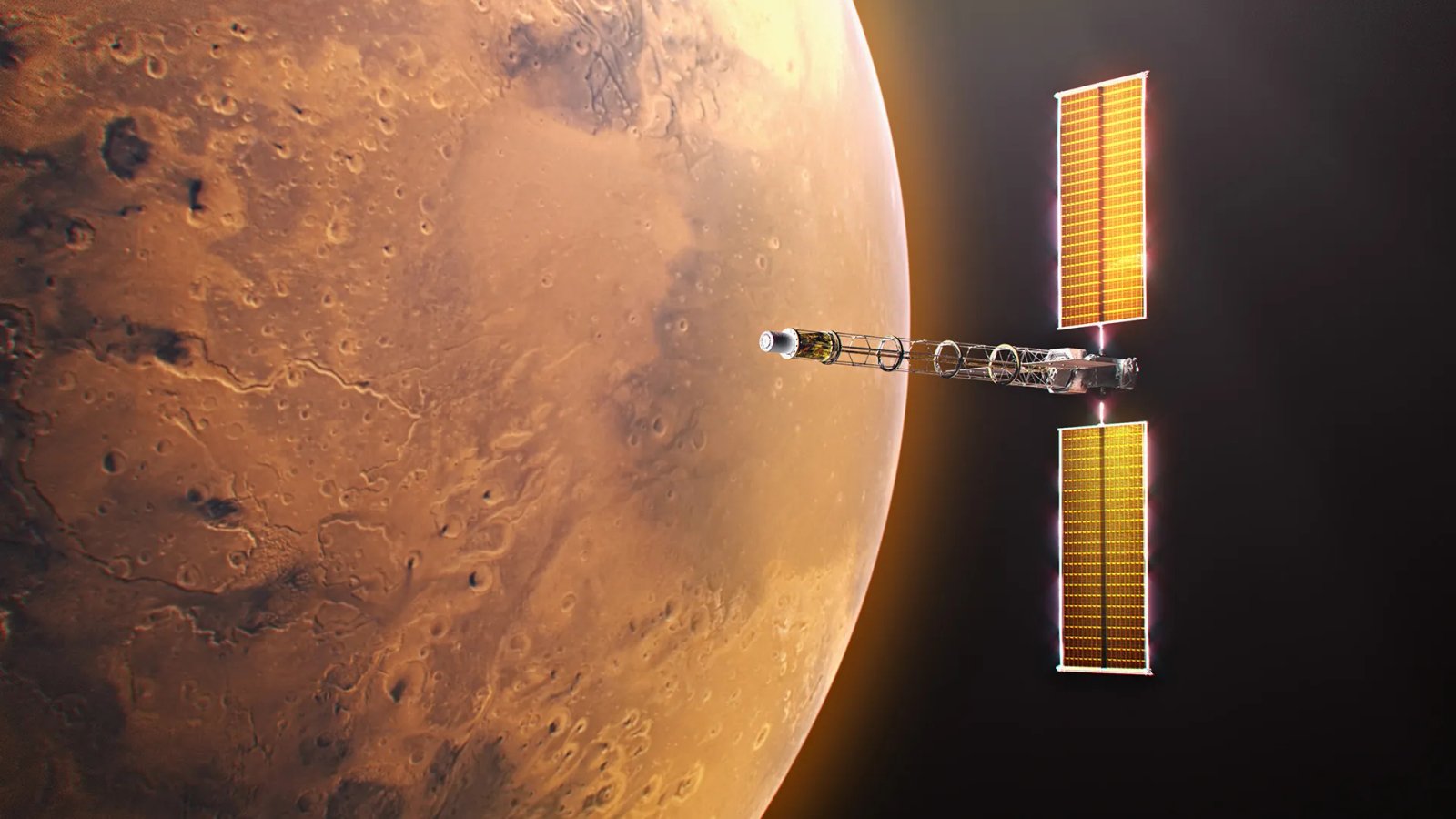
NASA’s Space Reactor-1, or SR-1 Freedom, is moving toward a planned late 2028 launch. The spacecraft is designed to demonstrate nuclear electric propulsion beyond Earth orbit, a first for a fission-powered spacecraft. NASA announced the mission at its “Ignition” event and says recent contract actions will help speed development.
One key step concerns the spacecraft’s nuclear power module. Sierra Lobo Inc. will provide its closed Brayton cycle power conversion system. That system will turn heat from a fission reactor into electricity for the propulsion demonstration.
The work falls under a NASA contract awarded in 2024. It supports the design, development, testing and operation of spaceflight hardware at NASA’s Glenn Research Center in Cleveland. NASA says the agreed contract actions are intended to reduce technical risk and maintain progress toward launch.
Building the power module
The power conversion system is only one part of the module. The Department of Energy’s Idaho National Laboratory is designing and developing the fission reactor. NASA and DOE will integrate the reactor with the conversion system to complete the power module.
The approach could provide a useful source of electricity for spacecraft operating far from the Sun. Unlike solar panels, a fission system does not depend on steady sunlight. That could make it valuable for missions in deep space, as well as for future lunar operations during long periods of darkness or in places where solar power is limited.
The technology also brings substantial engineering and oversight demands. A reactor and power system must function reliably in a harsh environment, and teams must manage nuclear safety as well as spacecraft performance. NASA and DOE say safety is built into development through interagency reviews, regulatory compliance, continuous oversight by a NASA chief safety officer and design work focused on hazards and failure tolerance. The reactor will remain inactive until SR-1 Freedom has left Earth orbit.
That operating sequence is an important safety measure, but it does not remove the need for careful design, testing and review. The mission’s progress will depend on making the system work as intended while meeting those requirements. The available information does not yet detail the system’s full performance limits or how it will be tested before launch.
A demonstration with a wider purpose
SR-1 Freedom will carry SkyFall, a team of three Mars helicopters evolved from NASA’s Ingenuity design. The helicopters are intended to collect scientific data, demonstrate exploration zones and identify potential water sources. Their results could help inform later Mars exploration, while the spacecraft tests a power and propulsion approach intended for use beyond this mission.
The demonstration is part of a broader effort to develop fission-powered systems for space. NASA has identified future Moon Base operations as one possible use, particularly where solar power alone may not be sufficient. But a successful demonstration would be an early step, not proof that nuclear electric propulsion is the best choice for every mission. Its usefulness will depend on whether the added capability justifies the system’s complexity and the demands of building and operating it safely.
“ These contract actions not only reduce technical risk and help us maintain momentum toward our 2028 launch, but they also strengthen collaboration across our partners,” said Steve Sinacore, SR-1 Freedom program director. He said the work supports NASA’s first fission-powered voyage beyond Earth orbit and technology that could contribute to future space nuclear systems.
SR-1 Freedom’s progress therefore matters on two levels: It advances a specific Mars mission and tests whether nuclear electric propulsion can support longer-term exploration. The next milestone is turning the reactor and power conversion work into an integrated system capable of meeting the mission’s requirements.
For more information, visit NASA’s SR-1 Freedom mission page.
Expand Your Tech Knowledge
Explore the future of technology with our detailed insights on Artificial Intelligence.
Access comprehensive resources on technology by visiting Wikipedia.
Space
