

Summary Points
- Anton Kiriwas’ journey led him to play a key role in NASA’s Artemis missions.
- As a senior technical integration manager, he bridges engineering and test management teams.
- Kiriwas emphasizes rigorous training and readiness for unpredictable launch day challenges.
- He analyzes lessons from Artemis II to inform future lunar mission requirements.
The Path to NASA and the Artemis Missions
Anton Kiriwas’s journey to NASA is a remarkable story of ambition and dedication. While studying in college, he came across a job fair booth with images of the Moon and Mars. Those images sparked a dream, a goal that once felt unreachable. Little did he know, this dream would soon become his reality.
Kiriwas began his career during the Space Shuttle Program with United Launch Alliance. This organization was also behind the job fair booth that had once captured his imagination. Following this experience, Kiriwas joined NASA as a civil servant. Here, he designed electrical systems, laying the groundwork for his current role as the senior technical integration manager for the Exploration Ground Systems Program. His role is centered around finding solutions to complex problems, ensuring that each component functions seamlessly.
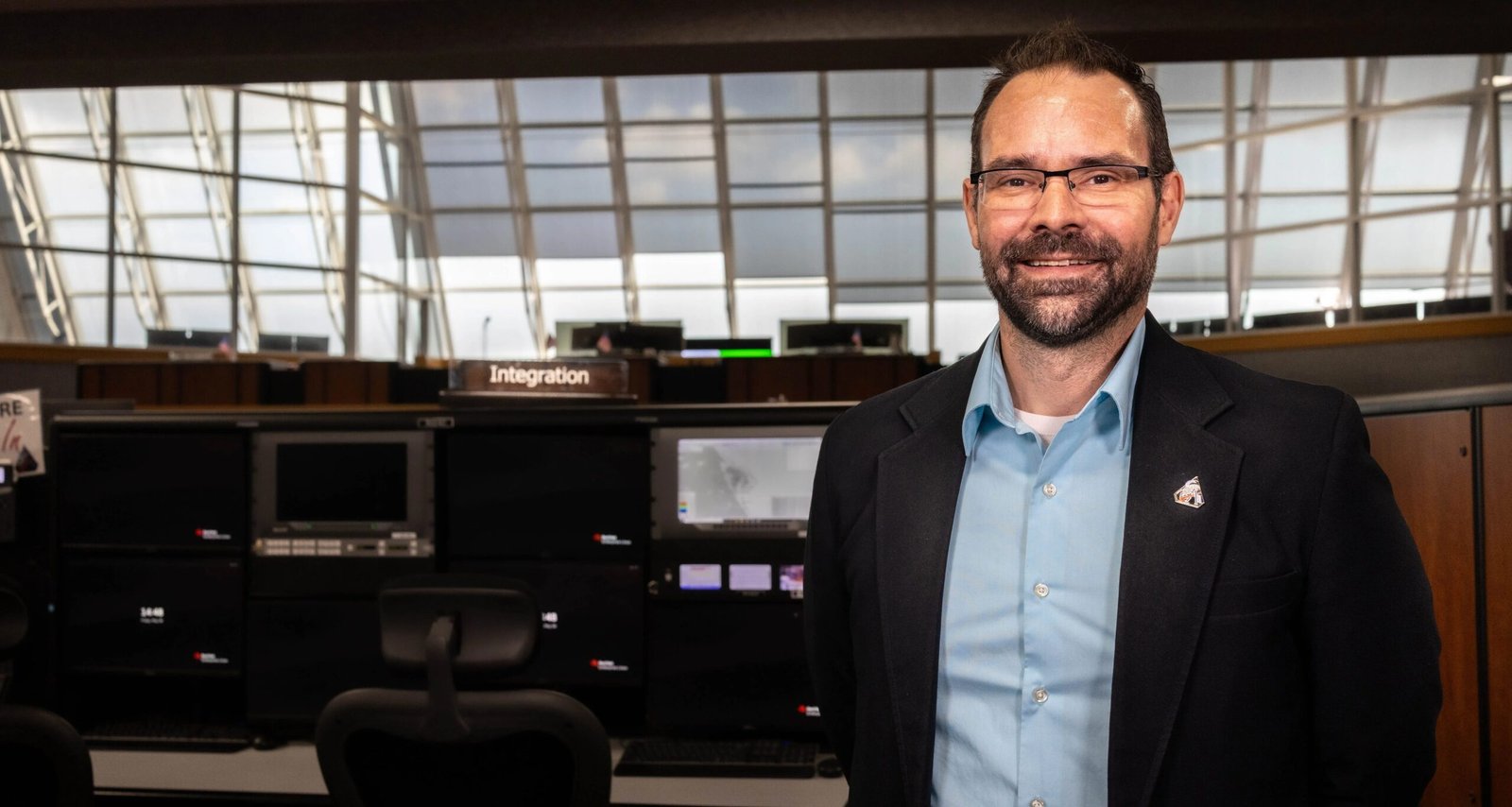
As a launch project engineer, Kiriwas operates from the integration console in the center of Firing Room 1 at Kennedy Space Center. This strategic position allows him to connect the test management team and engineering teams. He reports directly to the launch director, making critical technical recommendations during the launch countdown. Every countdown requires collaboration across all engineering disciplines, with one unified goal: to safely launch both the spacecraft and the crew.
The Adrenaline of Launch Day
Launch day is exhilarating yet demanding. Kiriwas describes the preparations leading up to launch as the more challenging aspect of the process. His team rigorously rehearses for countless scenarios, hoping for a smooth, uneventful day. Yet, should complications arise, Kiriwas knows exactly how to tackle the situation.
When issues surface, he focuses on fundamental questions: What are the requirements? Which systems are affected? Who needs to be involved? This straightforward approach allows Kiriwas to efficiently pull the technical community together. His goal is to work through the issue and provide a clear recommendation: a “go” or “no-go” for the launch.
While the excitement surrounding a launch can be palpable, Kiriwas remains grounded. “There is adrenaline to get to launch,” he said, “but you want to be careful to never let that turn into ‘launch fever.’ We need to launch exactly when we’re ready and not a moment before.”
As Artemis II wraps up, Kiriwas continues to apply his problem-solving skills. He analyzes lessons learned and helps shape future mission requirements. Artemis III hardware is currently being processed at Kennedy Space Center, with teams diligently preparing for the next lunar mission. “There’s a million little pieces that go into this, and I get to be a part of it,” Kiriwas noted, underscoring the collaborative spirit that drives NASA’s ambitious goals.
Stay Ahead with the Latest Tech Trends
Dive deeper into the world of Cryptocurrency and its impact on global finance.
Discover archived knowledge and digital history on the Internet Archive.
Space
