

Top Highlights
- Scientists found hidden fossil insects in amber from writer Goethe’s collection.
- Advanced imaging revealed a fungus gnat, black fly, and ancient ant.
- The ant, †Ctenobethylus goepperti, offered new insights into its anatomy.
- Goethe’s amber shows the enduring value of historical collections for science.
A Window to the Past: Goethe’s Amber Collection
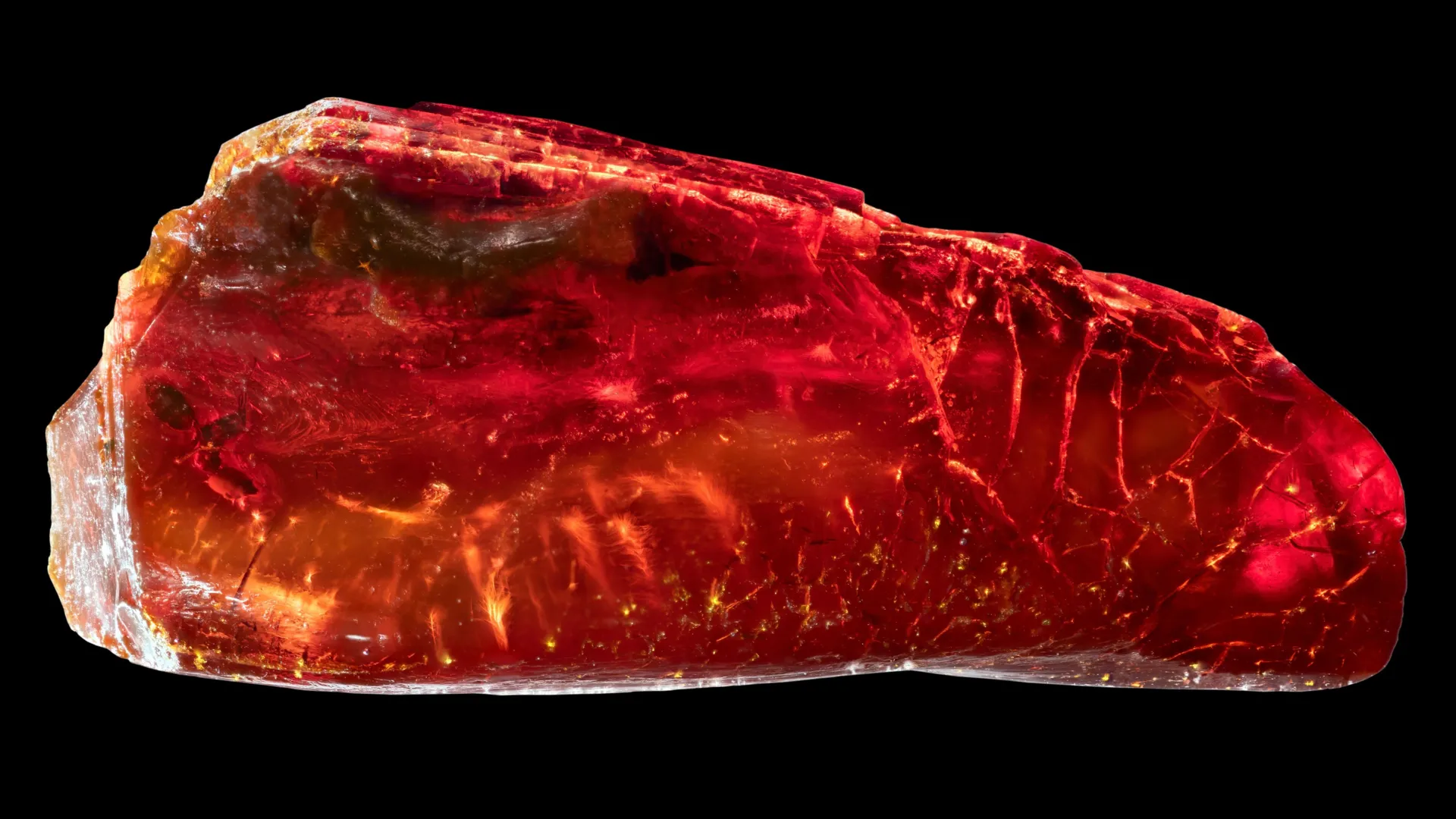
Scientists recently unlocked a hidden chapter of natural history within the amber collection of Johann Wolfgang von Goethe. His interest in amber focused mainly on its optical properties, yet his specimens now reveal ancient secrets. Researchers at the University of Jena, using modern imaging technology, discovered fossilized insects trapped in pieces of amber that Goethe owned. The discovery includes a 40-million-year-old ant of the species †Ctenobethylus goepperti.
These findings showcase the remarkable intersection of history, art, and science. The research team employed synchrotron micro computed tomography at the German Electron Synchrotron, revealing intricate details of the fossils. They found features such as fine body hairs on the ant and even visualized internal structures—something unprecedented. These insights deepen our understanding of ant evolution and behavior, suggesting that ancient ants built large nests in trees, which increases their chances of fossilization.
Modern Technology Breaths New Life into Historic Specimens
The utilization of advanced imaging techniques opens new doors for research. These tools allow scientists to analyze historical collections without altering them physically. They unearth details that previous generations couldn’t access. Researchers created a complete 3D reconstruction model accessible online, enabling global collaboration. This accomplishment demonstrates how past collections can yield fresh knowledge, enhancing our understanding of biodiversity and evolution.
As scientists celebrate these findings, they highlight Goethe’s legacy. He is hailed as a pioneer of morphology and would likely marvel at the discoveries made possible through new methods. This case underscores the value and relevance of historical collections in contemporary science. The past continues to shape our understanding of the natural world, revealing that what once seemed ordinary could be extraordinary. Technological advancements renew our perspective on history and its role in today’s scientific landscape.
Discover More Technology Insights
Stay informed on the revolutionary breakthroughs in Quantum Computing research.
Discover archived knowledge and digital history on the Internet Archive.
TechV1
