

Top Highlights
Rocket Lab launched three HawkEye 360 satellites from New Zealand aboard Electron.
The satellites will orbit 520 kilometers high, scanning global radio-frequency emissions.
Data supports maritime tracking, jamming detection, radar monitoring, communications mapping, and defense.
It was Rocket Lab’s 98th launch and nineteenth mission of 2026.
Rocket Lab launches three Hawk satellites to gather signals intelligence
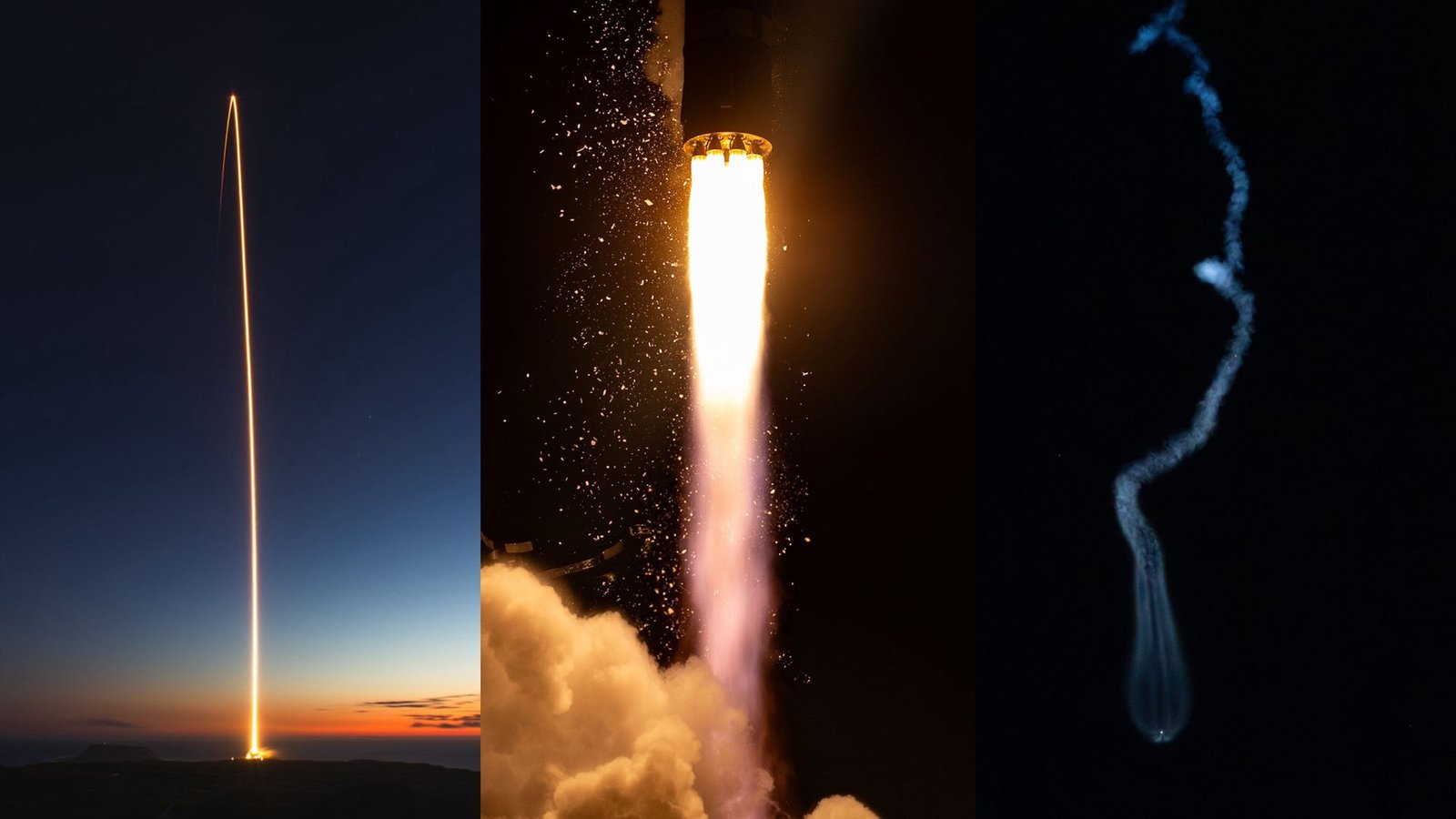
Rocket Lab sent three Hawk satellites into space on Oct. 23, 2026, adding to a growing fleet designed to detect radio-frequency signals around the world.
The company’s Electron rocket lifted off from Rocket Lab’s launch site in New Zealand at 3:11 a.m. EDT (0711 GMT; 8:11 p.m. local time). The mission carried satellites for Virginia-based HawkEye 360. Rocket Lab named the flight “We’re Not Hawking Around.”
What the Hawk satellites will do
The three satellites were slated for low Earth orbit at an altitude of about 323 miles (520 kilometers). After deployment and commissioning, they are expected to scan for radio-frequency, or RF, emissions. These are signals transmitted by devices such as radar systems, communications equipment and navigation technology.
HawkEye 360 operates its satellites in clusters of three. The company says its system supports maritime tracking, detection of interference with global navigation satellite systems, radar monitoring, communications mapping and space defense. It combines space-based signal collection with signal processing and artificial intelligence to analyze the data.
The company provides its information to the U.S. government and allied nations. Such data can help officials understand where signals are coming from and how activity in the RF spectrum changes. It can inform decisions about maritime activity, communications and potential interference with navigation systems.
But RF monitoring has limits. Detecting a signal does not necessarily reveal the content of a communication. Signals may also be brief, difficult to distinguish from other transmissions or absent when a satellite passes overhead. Turning raw observations into useful intelligence requires analysis, and the results depend on what signals the system can detect.
A growing constellation and a busy launch year
HawkEye 360 launched its first satellites in 2018 and has since sent nearly 50 into orbit. The three spacecraft on this mission followed another Hawk launch just two days earlier, when three satellites flew on SpaceX’s Bandwagon-5 rideshare mission.
The rapid launches show how commercial satellite operators can add capacity through more than one provider. Using dedicated and shared rides can give companies options for placing spacecraft in orbit, though timing and launch availability still shape when new satellites can be deployed.
For Rocket Lab, “We’re Not Hawking Around” marked its 98th launch and its 19th mission of 2026. Sixteen of this year’s flights used Electron, the company’s two-stage rocket, which stands 59 feet (18 meters) tall. The other three used HASTE, a suborbital version of Electron that gives customers a way to test technology in a hypersonic flight environment.
HawkEye 360’s expanding fleet reflects growing interest in commercial RF data. Its practical value will depend not only on collecting signals, but also on how reliably analysts can interpret them and how decision-makers use the resulting information.
Discover More Technology Insights
Stay informed on the revolutionary breakthroughs in Quantum Computing research.
Access comprehensive resources on technology by visiting Wikipedia.
Space
