
Close Menu
    Facebook X (Twitter) Instagram
    Saturday, August 1
    Top Stories:
    • Supervolcano Awakening: Fresh Magma Sparks Concern
    • Revolutionary Microwave Frying: Healthier French Fries Ahead!
    • Unlocking Power: The Tiny Molecular Basket Revolutionizes Chemistry
    Facebook X (Twitter) Instagram Pinterest Vimeo
    IO Tribune
    • Home
    • AI
    • Tech
      • Gadgets
      • Fashion Tech
    • Crypto
    • Smart Cities
      • IOT
    • Science
      • Space
      • Quantum
    • OPED
    IO Tribune
    Home » Unlocking Celestial Secrets: Moon and Vesta Revealed
    Space

    Unlocking Celestial Secrets: Moon and Vesta Revealed

    Staff ReporterBy Staff ReporterNovember 4, 2025No Comments3 Mins Read
    Share Facebook Twitter Pinterest LinkedIn Tumblr Reddit Telegram Email
    Share
    Facebook Twitter LinkedIn Pinterest Email

    Summary Points

    1. Inertia and Spin Dynamics: An ice skater increases spin speed by pulling arms inward, illustrating how changes in inertia affect rotational dynamics – a principle applicable to studying celestial bodies like Vesta.

    2. Vesta’s Mass Distribution: New measurements suggest Vesta has a homogeneous mass distribution rather than differentiated layers, challenging previous theories about its formation and interior structure.

    3. Implications for Planetary Formation: Vesta’s homogeneity indicates it may have originated from debris rather than having fully formed layered structures like Earth, which has a dense iron core due to gravity-induced differentiation.

    4. Broader Applications of Technique: The methods used to analyze Vesta’s inertia can also apply to other celestial bodies, allowing for advancements in our understanding of their interiors, as demonstrated with studies on Ceres and Io.

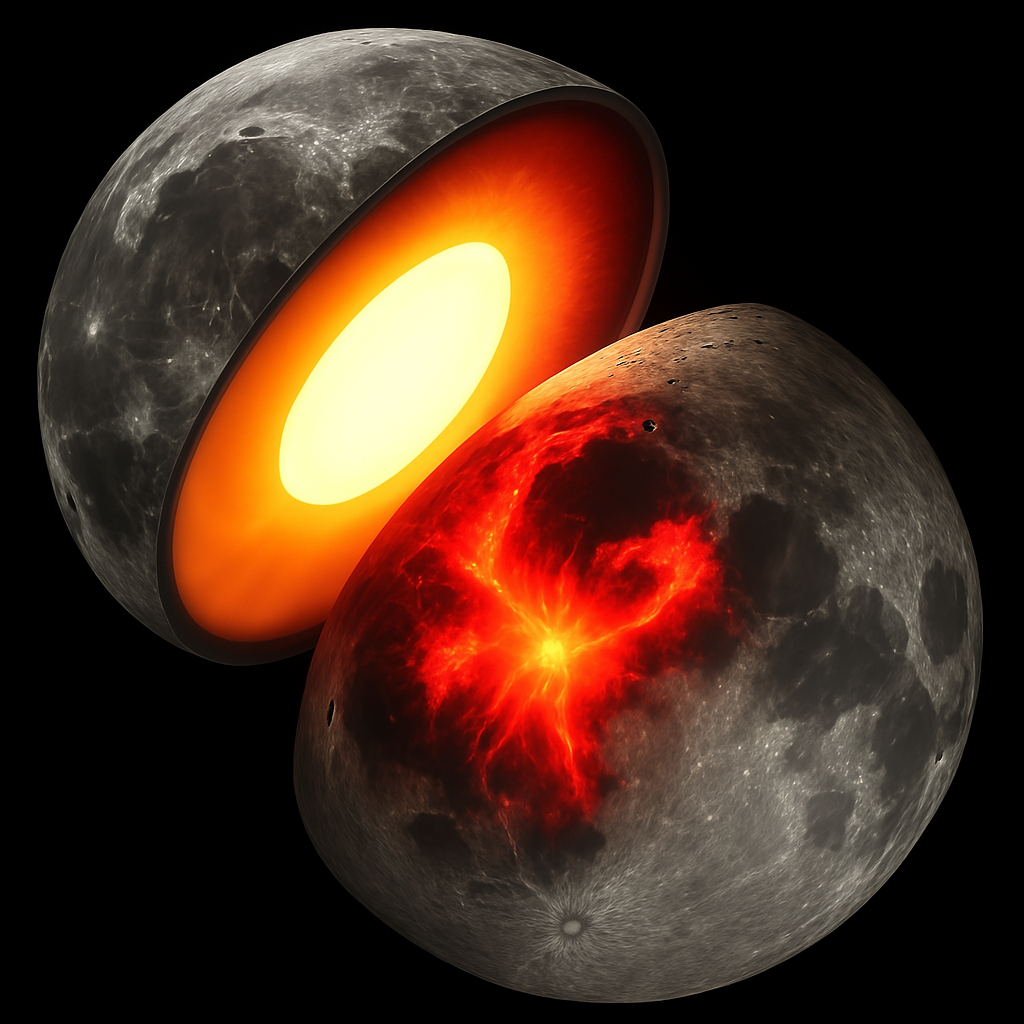
    NASA Studies Unlock Secrets of Moon and Vesta’s Interiors

    NASA’s recent studies shine a light on the hidden interiors of the Moon and the asteroid Vesta. These findings promise new insights into our solar system’s history and formation.

    Using advanced measurement techniques, scientists explored how mass is distributed within Vesta. The concept of inertia plays a key role here. For instance, when an ice skater pulls in their arms, they spin faster because their mass moves closer to their center. Similarly, Vesta’s inertia can reveal whether it has a dense core or if its mass is more evenly spread. Initial theories suggested that Vesta had layered formations. However, new measurements indicate a more homogeneous structure.

    This shift in understanding impacts how scientists view asteroid formation. If Vesta contains a small core or none at all, it may have formed from debris after a massive impact. Such insights could reshape our knowledge of celestial processes and the dynamics of asteroid evolution.

    Moreover, the research extends beyond Vesta. The team applied a similar approach to Jupiter’s moon Io. By tracking changes in Io’s gravity as it orbits, researchers determined that Io likely lacks a global magma ocean. This finding challenges previous assumptions about the moon’s geology.

    The technique developed for these studies offers exciting future applications. Scientists can use it to investigate the interiors of various planetary bodies. This could lead to advances in technology and enhance our understanding of planetary formation.

    With every discovery, NASA paves the way for new technology development and deepens our comprehension of the universe. Each study contributes to a richer picture of celestial bodies and, in turn, shapes our quest for knowledge.

    Continue Your Tech Journey

    Learn how the Internet of Things (IoT) is transforming everyday life.

    Explore past and present digital transformations on the Internet Archive.

    SciV1

    Cosmos NASA Research Space VT1
    Share. Facebook Twitter Pinterest LinkedIn Tumblr Email
    Previous ArticleColossal Biosciences Expands with ViaGen Pets and Equine Acquisition
    Next Article Wintermute CEO Dismisses Binance Lawsuit as ‘Baseless Rumor’
    Avatar photo
    Staff Reporter
    • Website

    John Marcelli is a staff writer for IO Tribune, with a passion for exploring and writing about the ever-evolving world of technology. From emerging trends to in-depth reviews of the latest gadgets, John stays at the forefront of innovation, delivering engaging content that informs and inspires readers. When he's not writing, he enjoys experimenting with new tech tools and diving into the digital landscape.

    Related Posts

    Space

    Revolutionizing Skies: NASA’s New Frontier in Flight Dynamics

    August 1, 2026
    AI

    Gemini Robotics 2 Empowers Robots with Full-Body Intelligence

    August 1, 2026
    Quantum

    Is AI Reasoning Flawed or Just Misunderstood?

    August 1, 2026
    Add A Comment

    Comments are closed.

    Must Read

    Revolutionizing Skies: NASA’s New Frontier in Flight Dynamics

    August 1, 2026

    Gemini Robotics 2 Empowers Robots with Full-Body Intelligence

    August 1, 2026

    Is AI Reasoning Flawed or Just Misunderstood?

    August 1, 2026

    Boston’s $10B Coast Resilience Secures Billions Funding

    August 1, 2026

    Supervolcano Awakening: Fresh Magma Sparks Concern

    August 1, 2026
    Categories
    • AI
    • Crypto
    • Fashion Tech
    • Gadgets
    • IOT
    • OPED
    • Quantum
    • Science
    • Smart Cities
    • Space
    • Tech
    Most Popular

    Synergy Unleashed: How MIT is Blending Data, Systems, and Society!

    June 11, 2025

    Fourth Power’s Thermal Batteries: A Cheaper Alternative to Gas Plants

    September 16, 2025

    EMQX Enterprise 6.2: Native Agent Discovery & Governance for AI & IoT

    April 10, 2026
    Our Picks

    U.S. Aviation’s Fragile Future: Shutdown Exposes System Cracks

    October 15, 2025

    Longing for Tiny Phones, Galaxy S26 Falls Short

    May 9, 2026

    Track Your Treats: KitKat Website Reveals Stolen Candy!

    April 2, 2026
    Categories
    • AI
    • Crypto
    • Fashion Tech
    • Gadgets
    • IOT
    • OPED
    • Quantum
    • Science
    • Smart Cities
    • Space
    • Tech
    • Privacy Policy
    • Disclaimer
    • Terms and Conditions
    • About Us
    • Contact us
    Copyright © 2025 Iotribune.comAll Rights Reserved.

    Type above and press Enter to search. Press Esc to cancel.