

Top Highlights
Certainly! Here are the key points and highlights from the article:
TLDR (3rd Person):
NASA’s Perseverance rover has been exploring Mars’ Jezero Crater, capturing significant selfies and studying ancient rocks in its quest to find signs of microbial life. Meanwhile, researchers highlight that the surge in satellite megaconstellation launches is contributing notable soot pollution in Earth’s atmosphere, which could have complex climate effects. Experts warn that this growing space activity poses environmental risks that need early regulation.
Highlights (4 concise points):
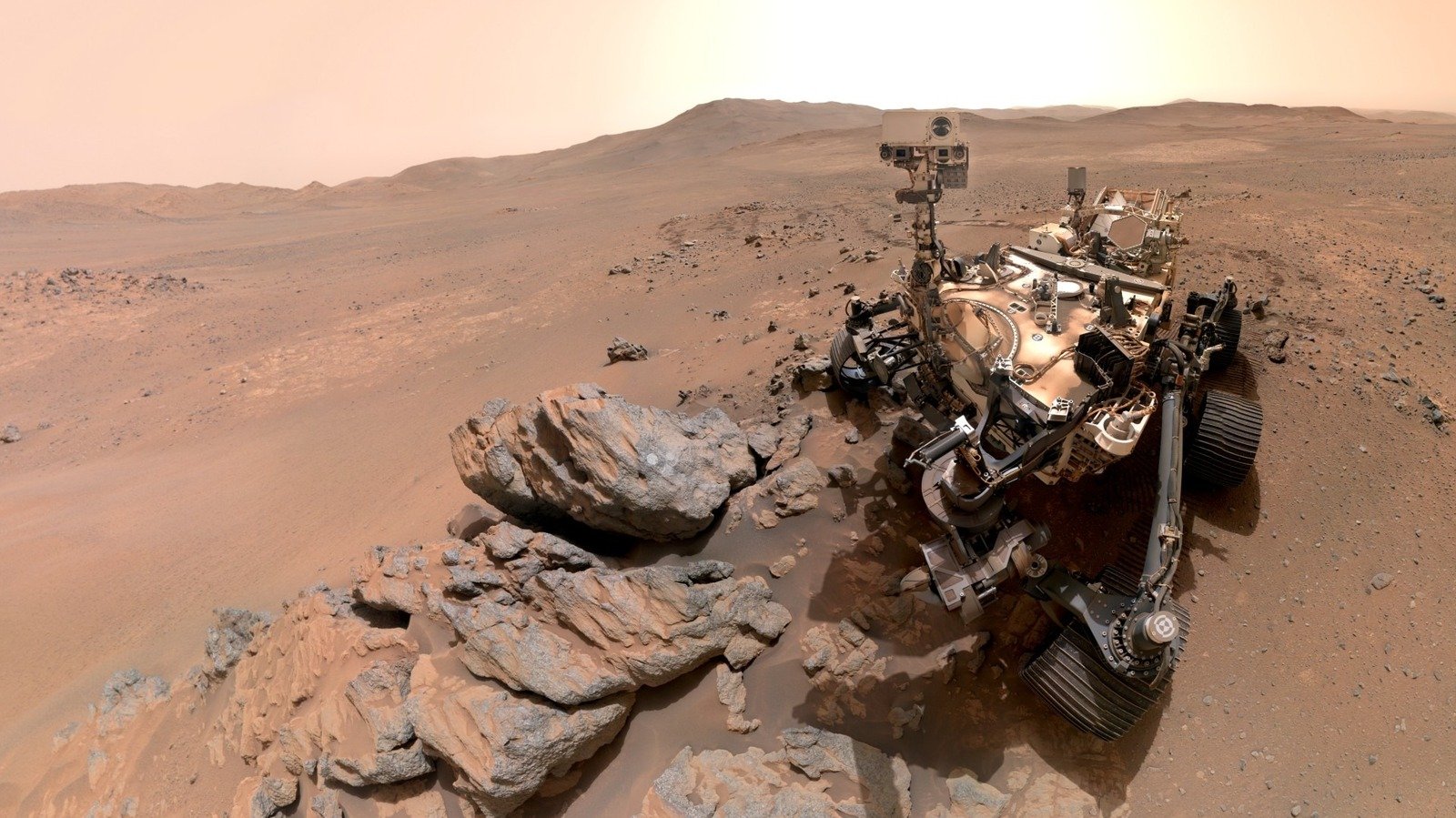
- Perseverance’s latest selfie marks its exploration beyond Mars’ Jezero Crater, revealing scientifically important terrain with ancient rocks dating billions of years.
- The rover is investigating diverse geological features, including large meteorite-landing rocks and possibly a volcanic dike, aiding our understanding of Mars’ history.
- Satellite megaconstellations, primarily from SpaceX and others, are releasing around 870 metric tons of soot annually into Earth’s upper atmosphere by 2029.
- The atmospheric soot may cause mild cooling by reducing sunlight but poses environmental risks akin to unregulated geoengineering, demanding cautious oversight.
Perseverance Captures Its Sixth Selfie and Explores New Terrains on Mars
NASA’s Perseverance rover continues to reveal the mysteries of Mars. Recently, it took its sixth selfie on the red planet. This image shows Perseverance in a rocky area called “Arathusa,” west of Jezero Crater. The selfie was made from 61 pictures taken by the rover’s robotic arm camera on March 11. NASA shared an animated version that shows Perseverance swiveling to look around. That movement helps scientists understand its surroundings better.
The rover has also moved to a new site called “Arbot.” There, it captured a wide panorama made from 46 images. This view reveals many large rocks, some as tall as skyscrapers. These rocks likely arrived after a meteorite impact nearly 4 billion years ago. Scientists are interested in studying these rocks because they could hold clues about Mars’ ancient climate and possible signs of past life. Perseverance also collects rock samples by drilling and grinding. These samples will be analyzed in the future to learn more about Mars’ history.
The exploration so far has shown interesting features, such as what might be a volcanic dike, a sign of volcanic activity long ago. The rover’s ongoing mission involves investigating ancient rocks and formations. It will soon move to a new area called “Gardevarri,” continuing its quest to uncover the planet’s secrets. These discoveries not only expand our understanding of Mars but also inspire new technologies and science breakthroughs.
The Rise of Satellite Megaconstellations and Their Climate Effects
Over the past decade, space companies launched thousands of satellites into Earth’s orbit. These satellites form large networks called megaconstellations, designed to improve global internet coverage. Since 2019, companies like SpaceX have launched nearly 12,000 satellites for Starlink. Currently, more than 10,300 of these satellites are active in orbit. Other firms, including Amazon, are quickly expanding their own satellite networks.
However, this rapid increase has raised concerns about pollution in Earth’s atmosphere. Recently, scientists studied how satellite launches add soot, or tiny carbon particles, to the upper atmosphere. They found that by 2029, these launches could leave about 870 metric tons of soot annually. This soot can stay in the atmosphere for years. Its presence might cause climate effects, including mild cooling by blocking sunlight.
While this effect might seem helpful amidst global warming, experts urge caution. The pollution caused by satellite launches is a small-scale geoengineering experiment. It could have unpredictable consequences if it continues unchecked. Currently, satellite-related pollution accounts for about one-third of the space sector’s climate impact. If the trend continues, this number might increase to nearly half by 2029. This situation highlights the need for responsible space activity to avoid harming Earth’s environment.
These stories remind us that exploration, whether on Mars or in orbit, always comes with responsibilities and opportunities. Developing new technology and understanding environmental impacts will shape the future of space and Earth.
Continue Your Tech Journey
Dive deeper into the world of Cryptocurrency and its impact on global finance.
Stay inspired by the vast knowledge available on Wikipedia.
CellphonesV1
