

Fast Facts
-
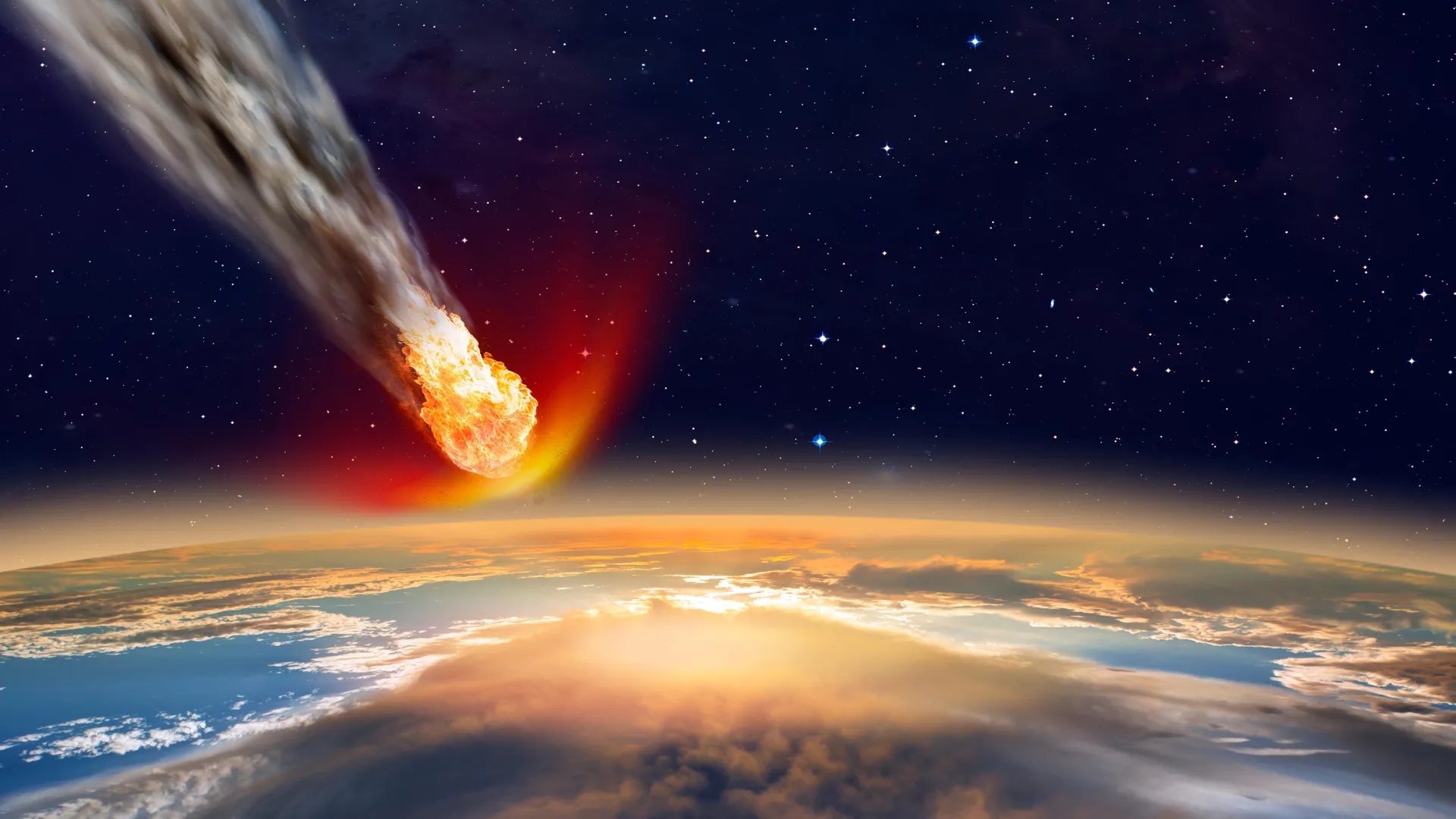
Meteor Impact Insights: New research indicates meteor strikes could have created hydrothermal environments rich in chemicals and heat, potentially fostering the conditions for life’s origins on early Earth.
-
Novel Hydrothermal Focus: The study emphasizes impact-generated hydrothermal systems— overlooked settings formed by meteorite collisions—as viable candidates for where life may have first emerged, expanding beyond traditional deep-sea vent theories.
-
Student-Led Breakthrough: Shea Cinquemani, an undergraduate, led the research which evolved from a class project into a peer-reviewed publication, showcasing the significant role of students in pioneering scientific discoveries.
-
Broader Implications for Life Beyond Earth: Findings support the search for extraterrestrial life by suggesting similar hydrothermal systems might exist on icy moons and Mars, guiding future astrobiological exploration.
Meteor Impacts: Catalysts for Life
Recent research reveals a striking possibility: meteor strikes may have sparked life on Earth. While meteor impacts often evoke images of destruction, they may have created hot, chemically rich environments conducive to life’s beginnings. For instance, scientists now consider impact-generated hydrothermal systems as viable candidates for where life may have first emerged. These systems likely formed when massive meteors hit the Earth, melting surrounding rock and creating nutrient-loaded pockets of water. Such environments, characterized by their heat and unique chemical combinations, could serve as cradles for the earliest complex reactions necessary for life.
As experts delve deeper into this theory, they highlight the significance of hydrothermal vents—both on Earth and potentially beyond. These vents, discovered in the late 1970s, support diverse ecosystems that thrive without sunlight. Instead, these organisms rely on chemosynthesis, deriving energy from chemical reactions present in their environments. By examining the evolution of these impact-driven hydrothermal systems, scientists offer a fresh perspective on Earth’s early conditions. This research not only reshapes our understanding of life’s origins but also suggests that similar processes could occur on other planetary bodies, like Europa or Enceladus, where conditions might mirror those of early Earth.
Expanding Horizons in Science
The journey from classroom project to scientific publication showcases the importance of curiosity in advancing our understanding of life. When tasked with exploring the potential for extraterrestrial life at hydrothermal vents, an undergraduate took the initiative to extend her findings into a comprehensive review. This determination culminated in a significant contribution to the scientific community, highlighting the collaboration between students and seasoned researchers. Through rigorous analysis and peer review, her work emphasizes that persistence pays off in science.
In exploring the role of meteor impacts in life’s origins, researchers challenge conventional narratives. This shift encourages broader thinking about the conditions necessary for life and the potential for discovery beyond Earth. It reinforces the notion that catastrophe can foster creation, transforming devastation into environments for emergence. Such insights resonate with humanity’s fundamental drive for knowledge and growth, pushing researchers to investigate our origins while igniting a passion for exploration beyond our planet. The pursuit of understanding where we come from motivates ongoing inquiry—transforming curiosity into a quest to unearth the mysteries that surround us.
Expand Your Tech Knowledge
Learn how the Internet of Things (IoT) is transforming everyday life.
Access comprehensive resources on technology by visiting Wikipedia.
TechV1
