

Fast Facts
-
Plankton’s Role: Plankton are vital to Earth’s ecosystems, producing significant oxygen and serving as the ocean food chain’s base, while their diversity includes tens of thousands of species, many still undiscovered.
-
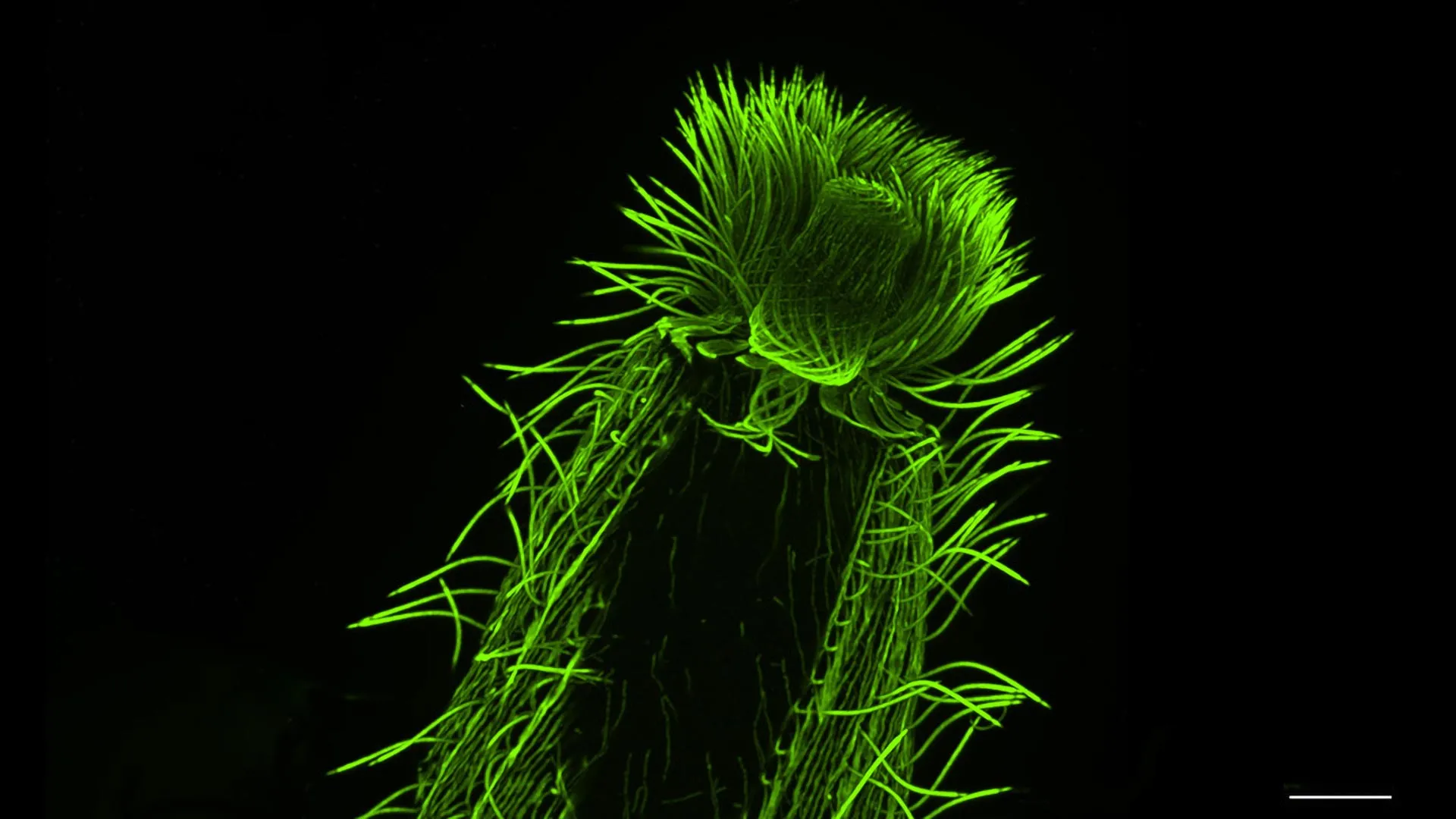
Breakthrough Imaging Technique: A new imaging method, expansion microscopy, developed during the COVID-19 pandemic, enables unprecedented visualization of complex internal structures in protists by overcoming previously impenetrable cell walls.
-
Comprehensive Cellular Insights: Research from the EMBL-led TREC expedition has mapped cellular structures of over 200 plankton species, enhancing understanding of eukaryotic cell organization and diversity in marine microorganisms.
-
Future of Microscopy and Research: The team aims to create a “planetary atlas” of plankton, leveraging expansion microscopy to connect cellular architecture with evolutionary patterns, supported by a CHF 2 million grant for further exploration.
A Pandemic Collaboration Sparks Discovery
The recent breakthrough in microscopy promises to transform our understanding of ocean life. Plankton, often overlooked, serve as the foundation of the oceanic ecosystem. They generate a significant percentage of Earth’s oxygen and boast a staggering variety of species. Unfortunately, previous imaging techniques struggled to reveal their complex structures. This limitation stunted scientific exploration for years.
During the COVID-19 pandemic, a unique collaboration emerged. Researchers adapted a method known as expansion microscopy, allowing them to visualize intricate details within tiny organisms called protists. This approach opened new doors by overcoming challenges presented by the tough cell walls of these marine organisms. As a result, scientists can now observe the organization of various plankton species in unprecedented detail. They embarked on a long-term project to map this hidden life, building a “planetary atlas” of plankton. Such detailed insight enhances our grasp of marine ecosystems and their evolutionary significance.
Exploring Marine Microbes in Unprecedented Detail
The expansion microscopy technique revolutionizes how we study marine life. By physically enlarging samples, scientists can examine microscopic structures without the constraints of traditional microscopy methods. This advancement reveals the cytoskeletons of eukaryotic cells, allowing researchers to explore how different species structure their internal systems. The implications are far-reaching.
Understanding plankton’s diverse cellular architecture provides insights into their evolutionary history. As scientists continue to explore these organisms, they uncover essential data about ecological connectivity and evolutionary development. With substantial funding secured for future research, the path ahead looks promising. This new wave of exploration might reveal answers to fundamental questions about life in the oceans and the world beyond. It could lead to more significant discoveries about our planet’s future and its unseen inhabitants.
Discover More Technology Insights
Stay informed on the revolutionary breakthroughs in Quantum Computing research.
Stay inspired by the vast knowledge available on Wikipedia.
TechV1
