

Top Highlights
- NASA plans to boost the Neil Gehrels Swift Observatory’s orbit with LINK.
- The mission will launch from Kwajalein Atoll on June 30, 2023.
- LINK, a servicing satellite, will grapple and raise Swift’s altitude.
- This mission enhances satellite servicing, supporting future space endeavors.
NASA’s Swift Observatory: A New Chapter in Space Servicing
NASA is preparing for an exciting venture: the launch of the Swift Boost Mission. This mission aims to lift the Neil Gehrels Swift Observatory’s orbit, ensuring it remains operational for years to come. Scheduled to launch no earlier than June 30, 2023, at 6:23 a.m. EDT, the mission involves a robotic servicing satellite called LINK, developed by Katalyst Space. The launch will take place from Kwajalein Atoll in the Marshall Islands aboard a Northrop Grumman Pegasus XL rocket.
The Swift Observatory has been instrumental in NASA’s astrophysical explorations since its launch in 2004. Equipped with the capability to monitor transient cosmic events, Swift alerts other ground and space-based observatories to help coordinate follow-up observations. As solar activity increases, drag on spacecraft in low Earth orbit—like Swift—becomes a significant factor. If left unaddressed, Swift risked re-entering the atmosphere later this year. NASA’s proactive approach not only aims to extend Swift’s mission but also serves as a step forward for the U.S. commercial satellite servicing industry.
Ghonhee Lee, CEO of Katalyst, emphasized the mission’s innovative aspect. “Swift wasn’t designed to be serviced,” he noted. “This demonstrates a cost-effective blueprint for extending the life of spacecraft that were never intended for on-orbit maintenance.” By adapting technology for servicing purposes, the mission showcases the potential for future space missions, positioning humanity to establish a more permanent presence beyond Earth.
Preparing for the Mission: Ensuring Success
Before the launch, LINK underwent extensive environmental testing to simulate flight conditions. The satellite weighs about 880 pounds and features nearly 20 feet of solar panels that will power three ion thrusters and robotic arms. This equipment is vital for LINK to rendezvous with Swift, grapple it, and gradually elevate its orbit.
To secure Swift’s operational longevity, the mission’s success hinges on keeping the observatory above an altitude of approximately 185 miles. Anticipated orbital predictions indicated that Swift would dip below this critical threshold as early as July 2023. The operations team implemented several strategies to delay its descent. By adjusting the satellite’s power consumption and orientation, they aim to maximize Swift’s aerodynamic efficiency.
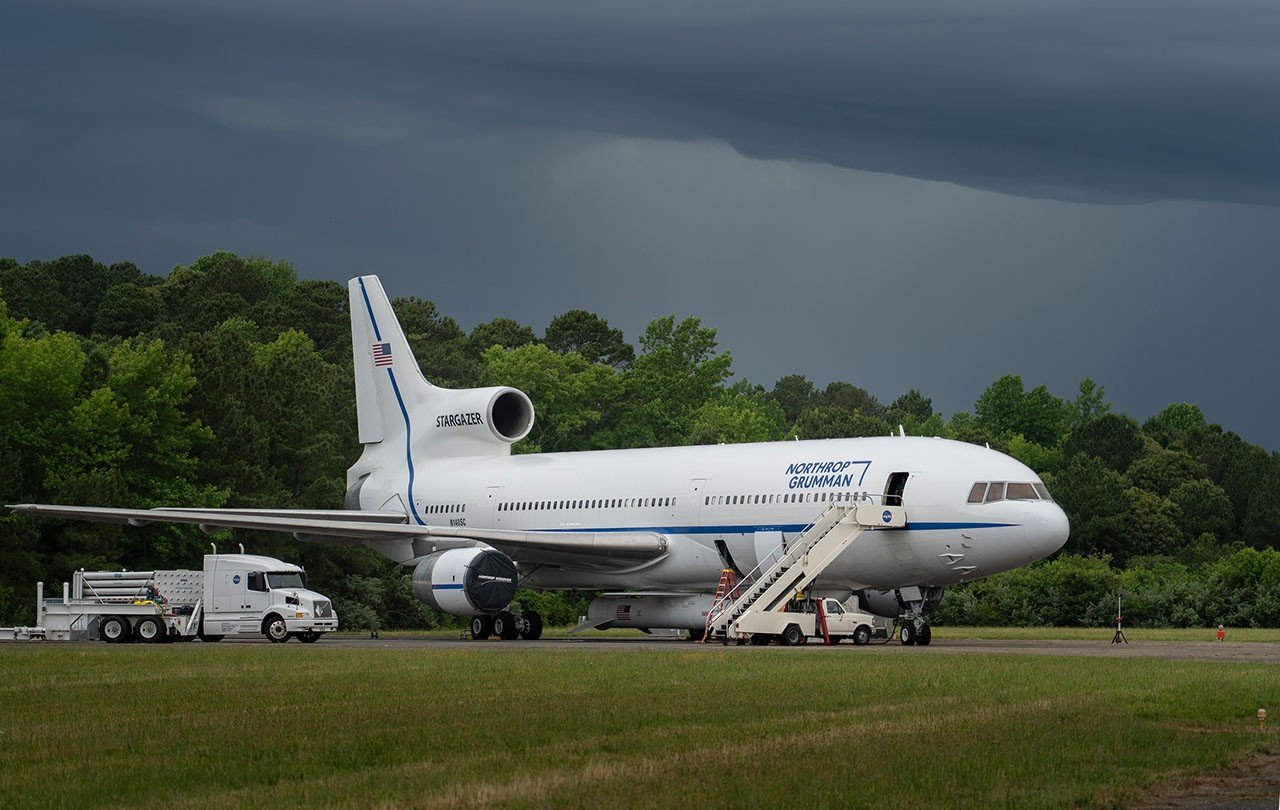
The responsive nature of the Pegasus XL rocket, which can be launched from various locations using the modified L-1011 aircraft called Stargazer, adds an additional layer of flexibility to the mission. As LINK moves into orbit, it will take several weeks to test and evaluate its systems. Following this commissioning phase, LINK will approach Swift, intended to elevate its orbit to approximately 370 miles.
This mission represents a calculated risk for NASA. The potential rewards include retaining a valuable scientific asset and advancing commercial space servicing technology. It illustrates the significance of innovative approaches to maintaining and enhancing our capabilities in space.
Stay Ahead with the Latest Tech Trends
Stay informed on the revolutionary breakthroughs in Quantum Computing research.
Access comprehensive resources on technology by visiting Wikipedia.
Space
