

Top Highlights
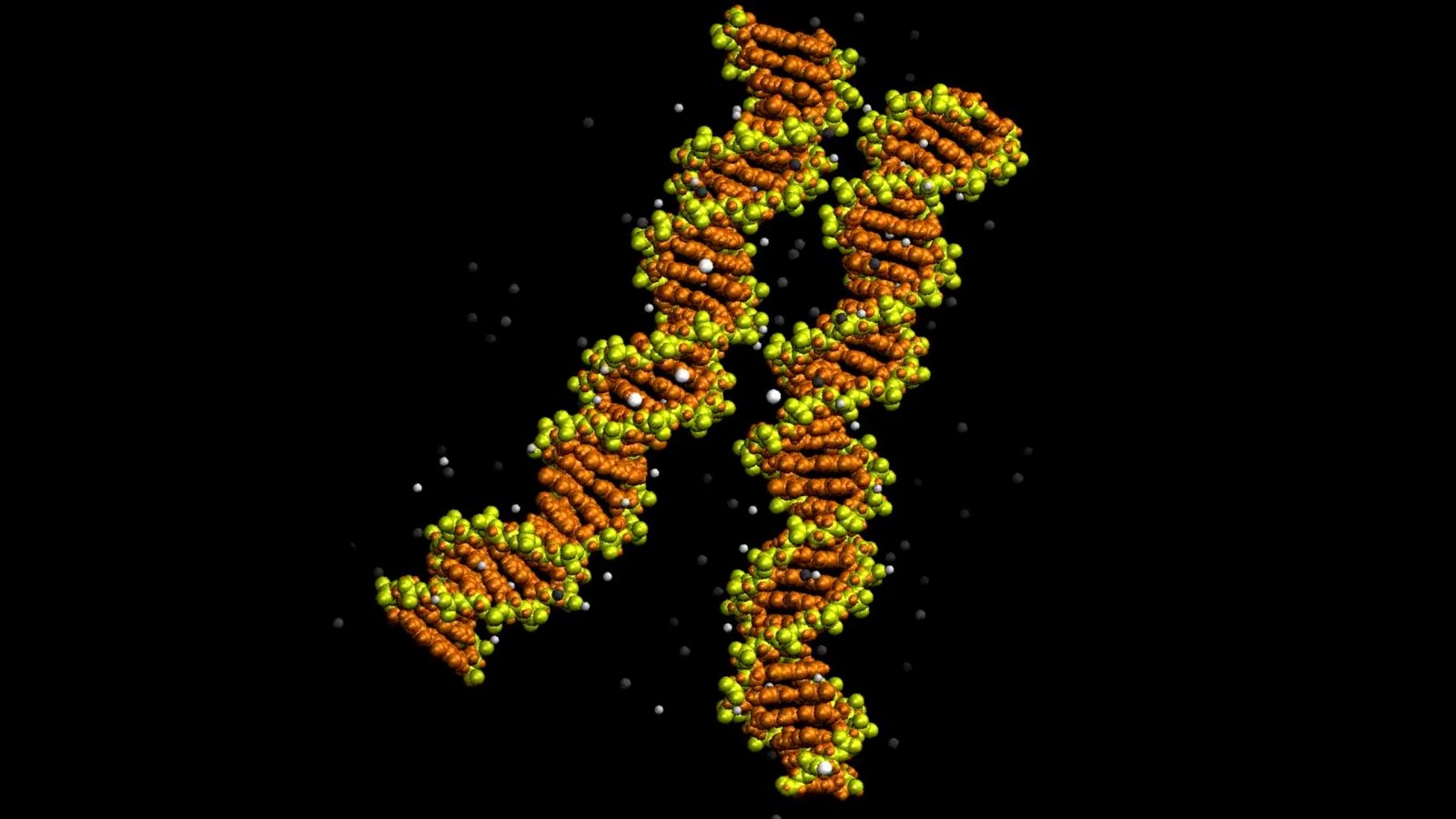
- Researchers captured detailed images of two aligned DNA helices resembling a zipper.
- Positively charged ions form salt bridges, enabling DNA molecules to pack tightly.
- Groove alignment and DNA sequence influence how and where DNA zips together.
- Study offers a molecular framework for understanding DNA pairing and potential biological roles.
High-Resolution Images Reveal How DNA Strands Lock Like a Zip
Scientists have captured the first detailed images showing two DNA double helices aligning tightly, like the teeth of a zipper. Using advanced atomic force microscopy, researchers observed how the grooves of these strands match up side by side. This confirms a hypothesis from over 20 years ago about how DNA molecules pack together inside cells. The images were enhanced with nickel ions, which allowed for better detail, revealing the major and minor grooves of each DNA helix clearly. Computer simulations supported these findings by showing how positively charged ions can create bridges, helping the strands stay connected. These bonds are often stronger when specific DNA sequences, such as GTAC, are involved. This work helps explain how DNA molecules may associate during processes like genetic recombination and packing within the cell.
Implications and Future Research
While these images and simulations demonstrate a possible mechanism for DNA pairing, they do not confirm this occurs naturally inside living cells. Inside cells, proteins and other molecules also play roles in organizing DNA. The study shows how negatively charged DNA can be held close through ion bridges and sequence preferences. Researchers suggest that initial contacts form through these ions, which then help match specific regions of DNA for longer pairing. Understanding these interactions provides insight into DNA packing and how genetic material exchanges information. Scientists hope to identify exact DNA sequences that serve as hotspots for pairing and explore links to health conditions like cancer. The findings are an important step toward understanding the physical nature of DNA organization.
Discover More Technology Insights
Stay informed on the revolutionary breakthroughs in Quantum Computing research.
Access comprehensive resources on technology by visiting Wikipedia.
QuantumV1
