

Quick Takeaways
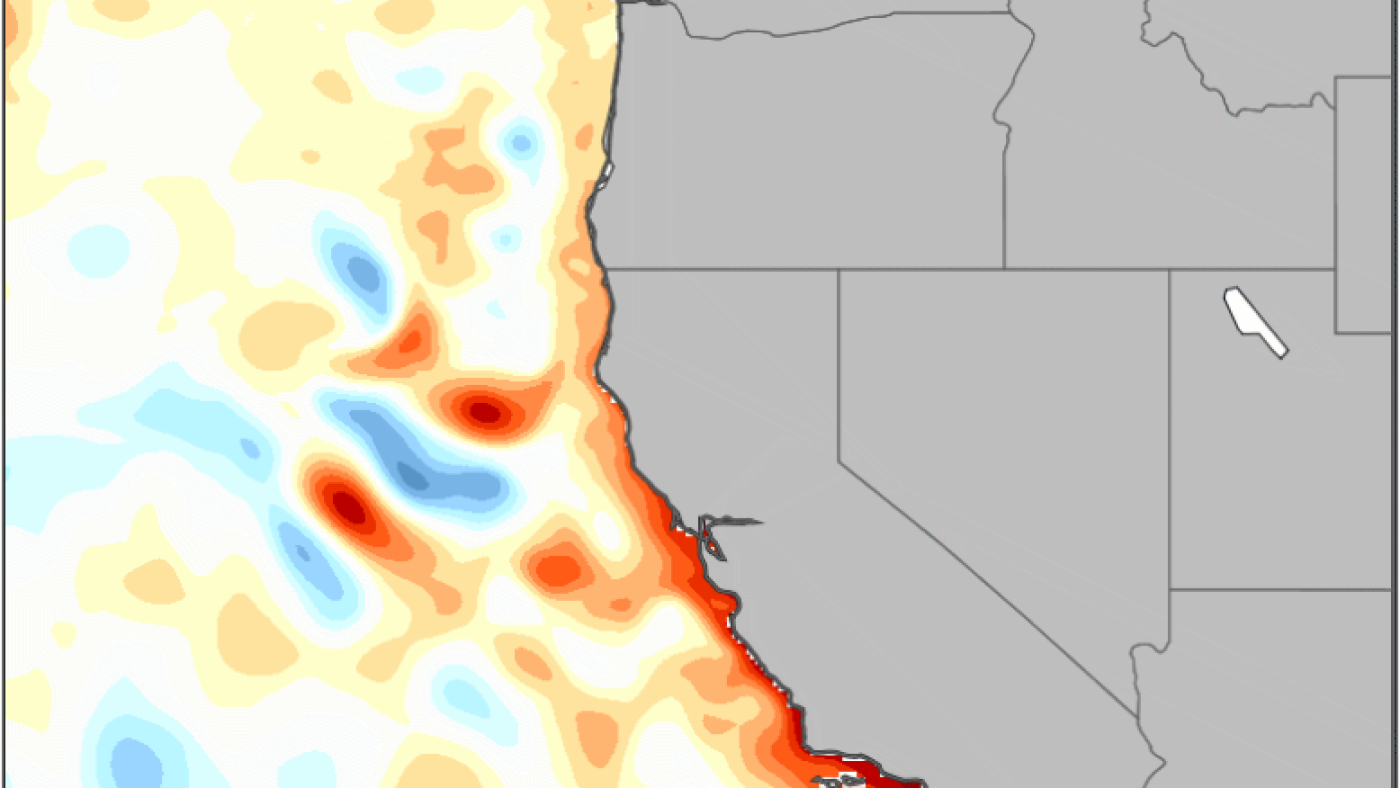
El Niño’s Kelvin wave is raising sea levels along the West Coast.
These waves travel eastward, then split north and south along coastlines.
Higher sea levels increase flooding risks when storms or unusually high tides coincide.
Warmer waters disrupt ecosystems, stress marine life, and suppress nutrient-rich cold-water upwelling.
An El Niño-Driven Kelvin Wave Reaches the West Coast
A slow-moving ocean wave linked to El Niño has raised sea levels along the U.S. West Coast. The wave is called a Kelvin wave. It is not a towering wall of water, and it cannot be surfed. Its effects are quieter—but they can make coastal flooding more likely.
Kelvin waves have drawn fresh public attention as a strong El Niño develops in the Pacific. Short videos online have helped explain the phenomenon, though the science behind it has been known for more than a century.
How the wave travels
El Niño occurs when a broad stretch of the tropical Pacific becomes warmer than usual. During strong El Niño periods, some of that warm water moves east beneath the ocean’s surface in a Kelvin wave. The wave can extend thousands of miles.
When it reaches South America, it splits. One branch travels north along the West Coast; another moves south toward Chile. The movement is slow and spread over a vast distance. It is more like a gradual shift in ocean conditions than a sudden surge.
A Kelvin wave raises sea levels as it passes and carries warmer water toward the coast. In the episode described by researchers, sea levels along the California coast were about 6 to 8 inches above normal.
That rise does not automatically cause a flood. Instead, it leaves less room between the ocean and vulnerable coastal areas. A storm surge or unusually high tide can then push water farther inland than it otherwise would.
This combination can create a dangerous overlap: elevated sea levels, a high tide and storm-driven water arriving at the same time. Southern California communities experienced flooding during Tropical Storm Rachel in early October. Researchers said the higher baseline sea level likely worsened the storm’s impact, leaving some oceanfront homes partly submerged.
Effects beyond flooding
Higher sea levels are not the wave’s only consequence. Kelvin waves also bring warmer water, which can disrupt marine ecosystems. Tropical fish may appear in places where they are rarely seen, and a whale shark was spotted off San Diego, according to researchers cited in the report.
Warm conditions can also push down the cold, nutrient-rich water that supports productive coastal ecosystems. That shift can affect food supplies for marine animals. Researchers reported signs of seabird deaths associated with warmer coastal waters.
Scientists can track changing sea levels and ocean temperatures through observations and forecast models. Those tools help identify changing conditions, but they cannot prevent a flood or predict every local impact with certainty. Coastal communities still need practical measures, including tide and storm monitoring, flood planning and clear warnings. Forecasts can provide useful lead time; local geography and the timing of storms determine what happens on the ground.
Strong El Niño years can produce several Kelvin waves. The report said another was expected to reach San Diego in late October or early November, with more possible through fall and early winter. These waves often ease before El Niño reaches its peak. The outlook cited in the report expected the El Niño pattern to remain strong through early 2027.
The central message is straightforward: A Kelvin wave is not a tsunami, and it does not arrive as a sudden wall of water. But by lifting sea levels and warming coastal waters, it can make familiar hazards more consequential. When high tides and storms coincide with that elevated baseline, even a modest change in sea level can matter.
Continue Your Tech Journey
Learn how the Internet of Things (IoT) is transforming everyday life.
Stay inspired by the vast knowledge available on Wikipedia.
Space
