

Summary Points
-
Automation Leadership: Rio Tinto’s Greater Nammuldi iron ore mine in Western Australia operates over 50 autonomous trucks and aims to improve safety and efficiency, marking it as a global leader in mining automation.
-
Safety and Productivity Gains: The shift to autonomous equipment has significantly enhanced worker safety and productivity, achieving roughly a 15% increase in operational efficiency due to the elimination of downtime related to human shifts.
-
Job Evolution, Not Elimination: While there is concern about job losses due to automation, Rio Tinto states that no jobs have been lost; instead, workers have been retrained for roles in monitoring and controlling autonomous operations.
- Ongoing Challenges: Despite advances, there remain concerns about the design of control interfaces and the potential for overwhelming workloads for operators, as well as incidents highlighting the need for improved safety measures with automated equipment.
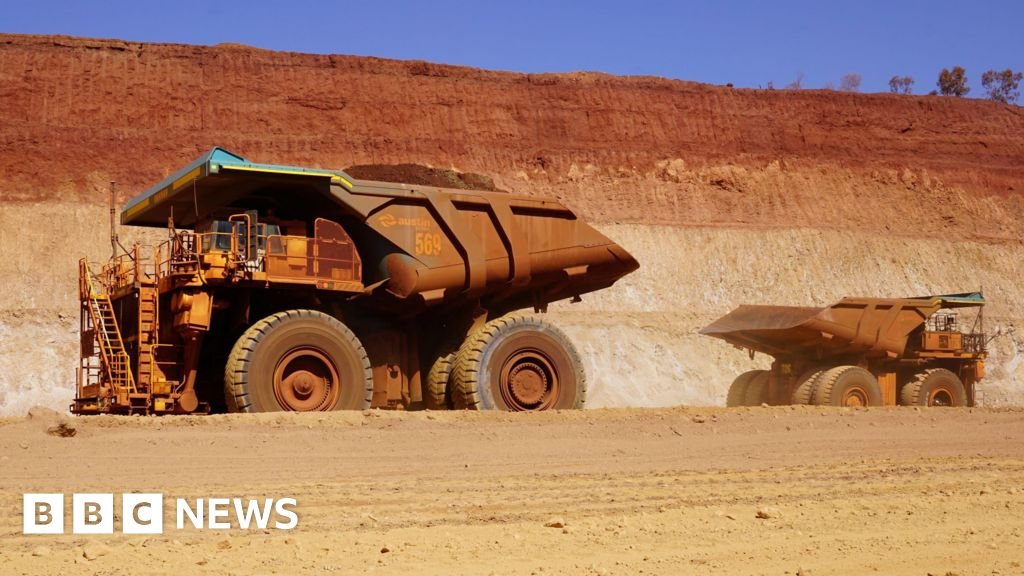
At Rio Tinto’s Greater Nammuldi iron ore mine in Western Australia, a quiet revolution is underway. Driverless trucks roam the red-earth roads, removing operators from dangerous settings. With more than 50 autonomous vehicles currently in operation, the mine exemplifies how technology reshapes industries.
These giant trucks, capable of hauling 300 tonnes each, follow pre-defined paths, navigating the complex terrain without human intervention. This system relies on high-accuracy GPS technology. A virtual bubble protects both the trucks and surrounding personnel by ensuring visibility within the system.
As the trucks operate, a central Operations Centre in Perth manages them remotely. Controllers monitor the fleet using a sophisticated interface, staying connected to over 360 autonomous trucks across various sites. This centralization simplifies coordination, making operations efficient even from hundreds of kilometers away.
The primary motive behind this automation is safety. Mining remains a perilous occupation. Autonomous trucks can reduce the risk of fatigue-related accidents. Matthew Holcz, managing director of Rio’s Pilbara mines, emphasizes that data shows a marked improvement in safety following automation. Furthermore, productivity has surged by 15%, demonstrating that technology streamlines processes and increases output.
Yet, the introduction of automation has sparked discussions about employment. Some critics argue that robots will replace human jobs. Contrary to this fear, Rio Tinto claims that no employees have lost their jobs due to automation. Instead, many workers transition into new roles, such as controlling the autonomous fleets or operating other equipment. Former truck drivers have found new opportunities, allowing their skills to evolve rather than diminish.
However, automation is not without its challenges. Experts like Professor Robin Burgess-Limerick note the technology still requires optimization in terms of human interaction. Some workers have reported losing situational awareness while managing numerous autonomous systems. Additionally, incidents involving the technology have raised alarm bells. A recent event with an autonomous train highlights the need for careful oversight and improved system designs.
Safety remains a top priority for both operators and regulators. Coordinated strategies have emerged to ensure that people and automation can coexist effectively. As automation expands, the industry must not overlook the importance of human factors and technology’s limitations.
In this ongoing transformation, Rio Tinto watches closely as competitors innovate. The shift toward automation in mining is inevitable, yet conscious efforts must accompany this evolution. The balance between advancing technology and maintaining a safe, efficient workplace will steer the future of the industry. As companies experiment with new equipment and systems, one thing remains clear: the relationship between humans and machines will continue to evolve.
Continue Your Tech Journey
Explore the future of technology with our detailed insights on Artificial Intelligence.
Stay inspired by the vast knowledge available on Wikipedia.
AITecv1
