

Quick Takeaways
-
5G Integration for Aviation: NASA is investigating how 5G cellular networks can support air taxi communications, potentially creating a framework for future aviation communication systems.
-
Testing Environment: Researchers set up a specialized radio system on an aircraft and a ground station to test signal strength and quality in urban settings, focusing on potential interference from buildings and propeller modulation.
-
Data Sharing and Future Research: Data from these initial tests will be shared with the FAA and the aviation industry to improve safety and communication standards, addressing challenges like data speeds and signal reliability.
- Enhanced Safety in Urban Air Travel: By leveraging existing cellular technology, NASA aims to establish reliable wireless networks for air taxis, essential for safe operations in crowded city environments.
NASA Tests 5G-Based Aviation Network to Boost Air Taxi Connectivity
NASA engineers are pushing boundaries in aviation technology. Recently, they conducted tests at the Glenn Research Center in Cleveland. Their focus? Harnessing 5G cellular network technology for air taxi communications.
In April and May, researchers created two specialized radio systems. They aimed to evaluate how effectively 5G could meet the demands of urban air travel. “The goal is to understand how wireless cellphone networks could enhance aviation operations,” said a lead researcher. This research might pave the way for advancements in air mobility, benefiting satellite navigation providers and telecommunications companies alike.
Instead of starting from scratch, NASA plans to use existing cellular technology. Researchers believe that if 5G can provide an “80% solution,” they can then address the remaining 20% unique to air taxis. Transitioning to this technology could significantly improve safety and efficiency in busy city skies.
5G networks shine in their ability to handle vast amounts of data with minimal delay. This characteristic makes them ideal for real-time location data between aircraft. Ground antennas can keep air taxis connected while flying over urban landscapes.
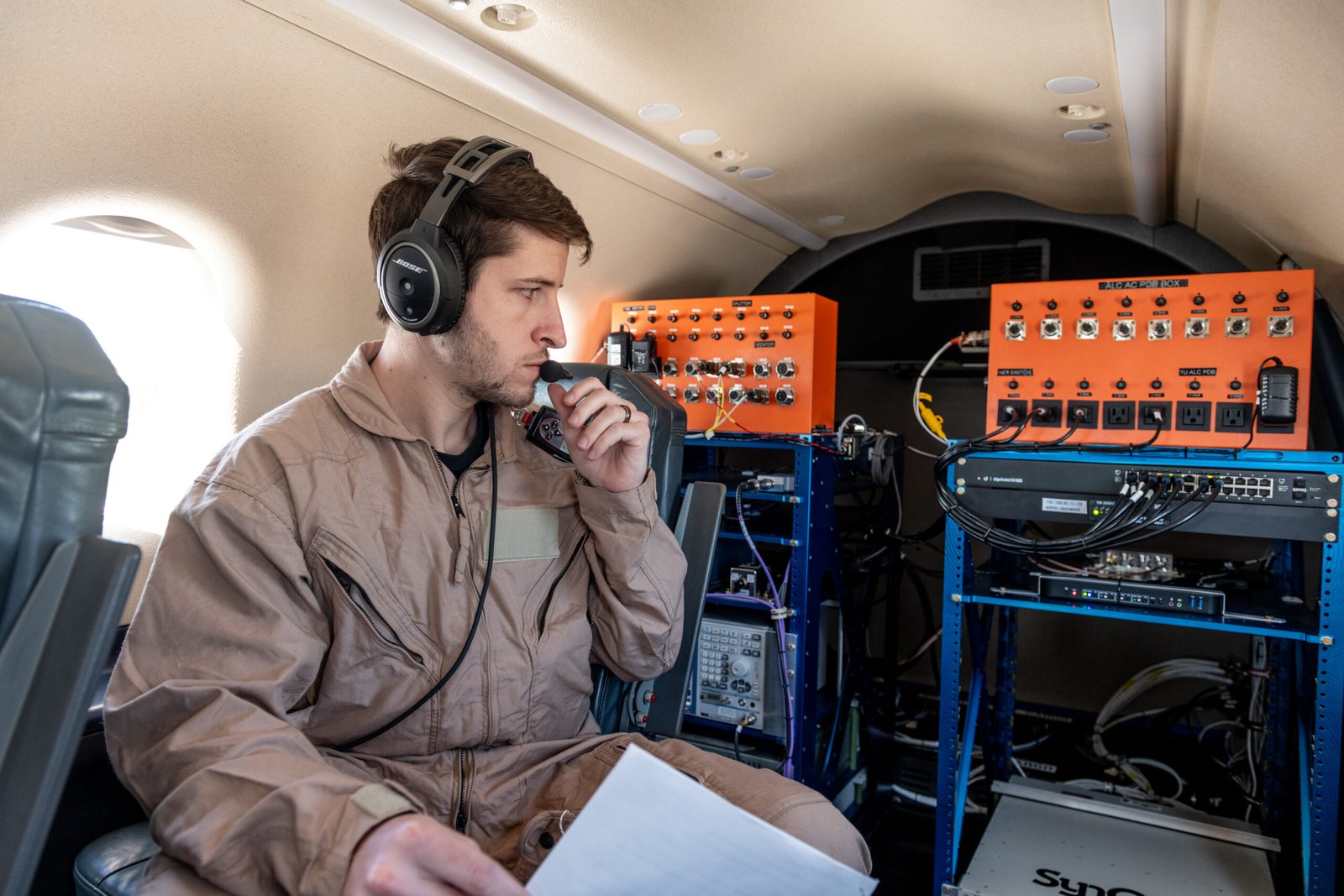
For their tests, NASA installed one radio on a Pilatus PC-12 aircraft and another atop their Aerospace Communications Facility. With a special FAA license, the team tested radio signal transmissions using designated frequencies. They measured how signals weakened as the aircraft distanced itself from the ground station. Simultaneously, they identified potential dead zones created by nearby buildings.
These tests served as an opportunity for NASA to refine their technology. The successful validation of their C-Band radio system marked a significant milestone. It also opened the door for further research on integrating 5G standards into existing aviation systems, enhancing communication between aircraft and ground stations.
Additionally, the team recorded a phenomenon called propeller modulation. This occurs when the aircraft’s rotating blades partially block radio signals and can cause signal degradation. At lower altitudes, where air taxis will operate, this effect can pose challenges. Therefore, researchers plan to study it further, especially as new air taxi models emerge.
The data collected will provide valuable insights for both the FAA and the burgeoning air mobility industry. Focus will shift to critical areas like maximum data speeds and signal quality. This foundational work ensures reliable communication systems for future air taxis. It enhances safety, especially in crowded urban environments.
This initiative falls under NASA’s Air Mobility Pathfinders project within the Airspace Operations and Safety Program. By integrating advanced communication systems, NASA envisions a connected future for air travel, transforming how we navigate city skies.
Discover More Technology Insights
Dive deeper into the world of Cryptocurrency and its impact on global finance.
Access comprehensive resources on technology by visiting Wikipedia.
SciV1
