

Essential Insights
- SpaceX launched 24 Starlink satellites into low Earth orbit on June 28.
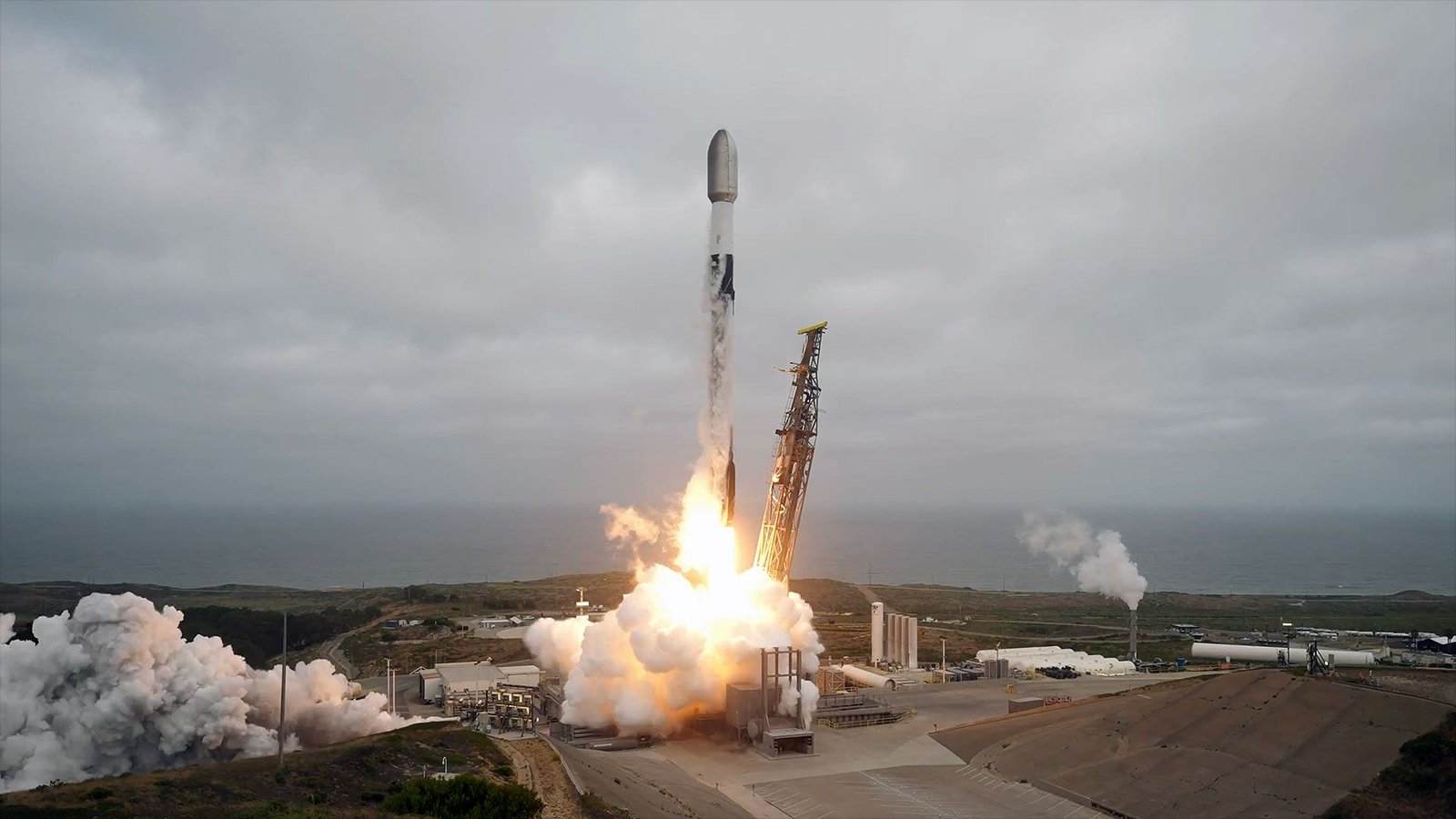
- The Falcon 9 rocket lifted off from Vandenberg Space Force Base, California.
- This mission marked the 17th flight for booster B1088, landing successfully.
- Starlink’s total active satellites now exceed 10,700, enhancing global internet access.
SpaceX Launches 24 Starlink Satellites from California
SpaceX recently launched 24 new Starlink satellites into low Earth orbit. This event occurred on June 28, 2026, via a Falcon 9 rocket. The mission was part of the company’s ongoing effort to expand its global broadband internet network. The launch took place at 12:09 p.m. EDT from Vandenberg Space Force Base in California.
The satellites belong to Group 17-40 and successfully reached orbit approximately nine minutes post-launch. Following the launch, they were expected to be deployed roughly an hour later by the Falcon 9’s upper stage. This mission represents a significant step in expanding SpaceX’s internet capabilities.
First Stage Success and Growing Starlink Network
The Falcon 9 rocket’s first stage, designated Booster 1088, successfully completed its 17th flight. It landed on the autonomous droneship “Of Course I Still Love You,” positioned in the Pacific Ocean. This achievement highlights SpaceX’s ability to reuse rocket components efficiently, reducing costs and increasing mission frequency.
With this launch, the total number of operational satellites in the Starlink network exceeded 10,700. According to space tracker Jonathan McDowell, this growing number is crucial for providing broadband internet access across the globe. The Starlink service aims to connect underserved areas and offers in-flight Wi-Fi, benefiting both domestic users and industries in need of reliable connectivity.
The rapid expansion of the Starlink network raises questions about the implications of satellite internet. Many applaud the technology for its potential to bridge the digital divide. However, concerns about space debris and environmental impacts are vital to consider. As SpaceX continues its ambitious launch schedule, balancing innovation and sustainability will be key for future missions.
SpaceX’s June 28 launch marked the 75th Falcon 9 mission in 2026 alone. This rapid pace illustrates the company’s commitment to enhancing global internet services while maintaining the advantages of reusable rocket technology.
Discover More Technology Insights
Stay informed on the revolutionary breakthroughs in Quantum Computing research.
Discover archived knowledge and digital history on the Internet Archive.
Space
